

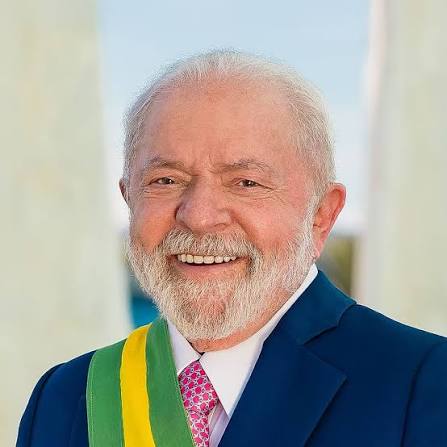
Lula returned to the presidency in 2023 after winning the 2022 election. On October 25, 2026, Brazil’s electoral authorities declared him the winner of a runoff, making him president-elect for a fourth, nonconsecutive term. His new term is scheduled to begin in January 2027. The result is a major new chapter in a career marked by working-class roots, social programs, political controversy, imprisonment, and a return to national office.
Lula da Silva at a glance
| Detail | Information |
|---|---|
| Full name | Luiz Inácio Lula da Silva |
| Common name | Lula |
| Date of birth | October 27, 1945 |
| Age | 80 as of October 26, 2026 |
| Place of birth | Garanhuns, Pernambuco, Brazil |
| Nationality | Brazilian |
| Political party | Workers’ Party (Partido dos Trabalhadores, PT) |
| Profession before politics | Metalworker and union leader |
| First presidential terms | 2003–2010 |
| Current presidential term | 2023–2027 |
| 2026 election | Declared winner of the October 25 runoff; elected to a fourth, nonconsecutive term |
| Next term scheduled to begin | January 2027 |
| Spouse | Rosângela “Janja” da Silva |
Early life and family background
Lula was born on October 27, 1945, in Garanhuns, a city in the northeastern Brazilian state of Pernambuco. He grew up in a large family. When he was a child, his family moved from Pernambuco to the state of São Paulo in search of work and better opportunities. Brazil’s federal government biography describes the family’s migration and Lula’s early years in the country’s southeast.
The move brought the family to a region that was rapidly industrializing. Lula’s childhood was shaped by modest circumstances and the need to work at a young age. He held several jobs, including work as a shoe shiner and office assistant. At 14, he began working in a warehouse and later trained as a lathe operator through a vocational program at the National Service for Industrial Training, known as SENAI.
That technical training led to work in the metalworking industry. Lula eventually became a metalworker in the industrial area around São Bernardo do Campo, near São Paulo. The city’s factories and labor organizations would become central to his public identity. His experience as a worker gave him direct familiarity with workplace conditions and the concerns that would later guide his union and political activities.
Rise in the labor movement
Lula became active in labor organizing in the late 1960s. He rose through the Metalworkers’ Union of São Bernardo do Campo and Diadema and became its president in 1975. Brazil was then under military rule, and unions operated in a difficult political environment. Labor leaders faced government pressure while workers sought higher wages and better working conditions.
In the late 1970s, Lula became a nationally known figure by leading large strikes among metalworkers. These actions challenged the military government and brought attention to labor demands. The Brazilian government’s presidential archive says that a 1979 strike involved roughly 150,000 workers and that the government intervened in the union. Lula and other union leaders were arrested under the National Security Law.
The strikes helped turn Lula into a prominent voice for workers and helped build networks that extended beyond the factory floor. His profile was no longer limited to union negotiations: he became part of a wider movement calling for political participation and a return to democratic government.
Founding the Workers’ Party and entering politics
In 1980, Lula joined union leaders, intellectuals, and social activists in founding the Workers’ Party, or PT. The party aimed to represent workers and other groups who felt excluded from Brazil’s traditional political system. It emerged during a period of political change as the country moved away from military rule.
Lula ran for governor of São Paulo in 1982, his first major electoral campaign. He did not win, but the campaign expanded his political visibility. In 1983, he helped establish the Central Única dos Trabalhadores (CUT), a national labor federation. Three years later, voters elected him to Brazil’s Constituent Assembly as a federal deputy for São Paulo.
His first presidential campaign came in 1989, the first direct presidential election after the military dictatorship. Lula reached the runoff but lost to Fernando Collor de Mello. He ran again in 1994 and 1998, losing both contests to Fernando Henrique Cardoso. These defeats did not end his political career. They gave him time to build the PT’s organization and broaden his appeal beyond its original base.
First two presidencies
Lula won the presidency in 2002 and took office in January 2003. His election was historically significant: a former metalworker and union leader had reached Brazil’s highest office after decades of campaigning and organizing. He was reelected in 2006 and served two consecutive terms, leaving office in 2010.
His governments became closely associated with social policies aimed at reducing poverty and expanding access to basic services. Programs such as Bolsa Família provided cash assistance to low-income households under conditions connected to schooling and health care. Lula’s presidency also coincided with economic growth, rising employment, and an expanded role for Brazil in international diplomacy. The effects of policy choices, economic conditions, and commodity markets are debated, but the period brought measurable changes in the country’s social and economic landscape.
Lula also pursued a more visible international role for Brazil. His administration sought stronger relationships with countries across Latin America, Africa, and Asia, while positioning Brazil as a voice in global discussions about trade, development, and climate. Supporters viewed this diplomacy as an assertion of Brazil’s influence; critics questioned particular alliances and policy decisions.
Investigation, convictions, and return to political life
After leaving office, Lula became entangled in Operation Car Wash, a major corruption investigation involving public contracts and political figures. In 2017, a federal judge convicted him in a case involving an apartment, and the conviction was upheld on appeal. Lula denied wrongdoing. In 2018, he began serving a prison sentence, which kept him from competing in that year’s presidential election.
The legal status of the cases later changed. In 2021, Brazil’s Supreme Federal Court annulled the convictions because the court in Curitiba that handled the cases lacked jurisdiction. The court also ruled that former judge Sergio Moro was biased in one of the proceedings. The decisions restored Lula’s political rights and allowed him to run in the 2022 election. Annulment on jurisdictional and impartiality grounds did not amount to a factual finding that every allegation was false; the legal rulings changed the status of the cases and Lula’s eligibility.
The episode remains an important and contested part of Lula’s biography. Supporters describe the cases as politically motivated, while opponents continue to criticize his record and the controversies surrounding his party and government. A balanced account should distinguish court rulings from political arguments made by either side.
Third presidency and 2022 election
Lula won the 2022 presidential runoff against incumbent Jair Bolsonaro by a narrow margin. He took office on January 1, 2023, beginning his third presidential term. His government returned social welfare and poverty reduction to the center of its agenda and also faced challenges involving economic policy, public security, environmental protection, and political polarization.
Among the major issues of the third term were Brazil’s role in climate policy and protection of the Amazon, relations with other countries, government spending, and the challenge of governing amid a divided electorate. Lula’s supporters pointed to expanded social commitments and renewed international engagement. Critics questioned the cost of policies, the government’s approach to economic management, and decisions concerning energy and the environment.
2026 reelection and fourth term
On October 25, 2026, Lula won Brazil’s presidential runoff against Senator Flávio Bolsonaro, according to reporting by the Associated Press and official Brazilian institutions. The election result makes Lula the president-elect for a fourth, nonconsecutive term. The Senate reported that the new term is scheduled to begin on January 5, 2027.
As of October 26, 2026, Lula remains in his third term, which began in 2023. The 2026 election result does not begin the next term immediately; the transition will occur at the scheduled inauguration. The close contest reflected the deep political divisions in Brazil and placed questions about the economy, public safety, social policy, and the country’s direction at the center of the campaign.
Personal life
Lula was married to Marisa Letícia from 1974 until her death in 2017. Government biographies report that they had children together and that Lula has a large family. In 2022, he married Rosângela da Silva, widely known as Janja. She has accompanied him in public and political life, including during his return to the presidency.
Lula’s personal story is often presented through his journey from a working-class childhood to national leadership. That background is central to how he describes his political identity and how supporters understand his connection to labor and social programs. It is also part of his broader public image, though it does not by itself settle debates about his policies or record.
Frequently asked questions
Who is Lula da Silva?
Luiz Inácio Lula da Silva, commonly called Lula, is a Brazilian politician and former metalworker who has served as president of Brazil. He is a founding figure of the Workers’ Party and a former union leader.
How old is Lula da Silva?
Lula was born on October 27, 1945. He is 80 years old on October 26, 2026, and turns 81 the following day.
Where was Lula born?
He was born in Garanhuns, in the state of Pernambuco, Brazil.
What party does Lula belong to?
He belongs to Brazil’s Workers’ Party, known in Portuguese as Partido dos Trabalhadores, or PT.
How many times has Lula been president?
He has served three presidential terms: 2003–2006, 2007–2010, and 2023–2027. He was declared the winner of the 2026 election for a fourth, nonconsecutive term, scheduled to begin in January 2027.
Was Lula a metalworker?
Yes. Before becoming a major political figure, he trained as a lathe operator and worked in Brazil’s metalworking industry. His experience there led to his involvement in labor unions.
Why was Lula imprisoned?
He was imprisoned in 2018 after corruption convictions connected to Operation Car Wash. In 2021, Brazil’s Supreme Federal Court annulled the convictions because the court in Curitiba lacked jurisdiction and ruled that the judge was biased in one case. The legal decisions restored Lula’s eligibility to run for office.
Who is Lula’s wife?
Lula married Rosângela “Janja” da Silva in 2022. He was previously married to Marisa Letícia, who died in 2017.
Final Word
Lula da Silva’s life reflects Brazil’s modern political history: labor organizing under military rule, the growth of a new political party, the country’s return to democracy, social policy debates, corruption investigations, and a dramatic political comeback. From metalworker and union leader to president, his career has attracted both strong support and sharp criticism. His 2026 reelection adds another chapter, with a fourth term scheduled to begin in January 2027.