

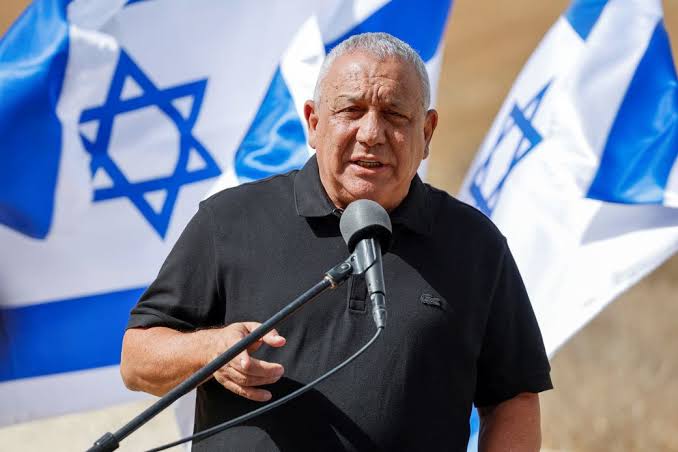
Gadi Eisenkot: Biography, Military Career, and Political Life
Gadi Eisenkot is an Israeli politician and retired military officer who served as chief of staff of the Israel Defense Forces (IDF) from 2015 to 2019. After nearly four decades in the military, he entered politics in 2022 and later founded the Yashar party. In Israel’s October 2026 election, he became a leading challenger to Prime Minister Benjamin Netanyahu.
Eisenkot’s public profile combines a long military career with a relatively recent political one. He has spoken about national security, government accountability, and the aftermath of the October 7, 2023, Hamas-led attack on Israel. The election results remained unsettled on October 28, 2026: vote counting was continuing, and neither major bloc had secured the 61 seats needed to form a majority government. Associated Press election update
Gadi Eisenkot at a Glance
| Detail | Information |
|---|---|
| Full name | Gadi Eisenkot |
| Born | May 19, 1960 |
| Birthplace | Tiberias, Israel |
| Known for | Military service and Israeli politics |
| Military service | Israel Defense Forces |
| IDF chief of staff | 2015–2019 |
| Military rank at retirement | Lieutenant general |
| Political party | Yashar |
| Earlier political affiliation | National Unity |
| Entered politics | 2022 |
| Current political role | Leader of Yashar and its 2026 election list |
| Family | Married; father of five |
| Education | Tel Aviv University; U.S. Army War College |
| 2026 election status | Vote count and coalition negotiations were ongoing as of October 28 |
Early Life and Education
Gadi Eisenkot was born in Tiberias on May 19, 1960, to a family of Moroccan Jewish immigrants. He grew up in Eilat, a southern Israeli city on the Red Sea. The IDF’s biographical profile says he joined the military at age 18, beginning a career that would span 41 years. IDF biography
Eisenkot studied history at Tel Aviv University and later pursued military and strategic studies, including at the U.S. Army War College. He continued his education alongside a demanding military career, which included command and staff roles across several parts of the IDF. His education and service helped shape a career focused on military planning, operational command, and national security.
Military Career
Eisenkot began his army service in the Golani Brigade, an infantry unit in the IDF. Over the following decades, he held a series of positions, including platoon and company command, leadership in the Golani Brigade, and roles overseeing operations and regional commands. The IDF lists his career progression through command appointments in the West Bank, the Northern Command, and the General Staff. IDF career history
His assignments included service as military secretary to the prime minister and defense minister, command of the Judea and Samaria Division, and leadership of the Northern Command. He later became deputy chief of the General Staff before being appointed chief of staff.
Eisenkot’s military service unfolded during decades of conflict and security challenges. As with any senior military commander, his record is connected to consequential decisions and operations. His role should be understood as that of a commander within the Israeli military structure, not as a civilian policymaker with sole authority over every action carried out by the IDF.
Chief of Staff of the IDF
Eisenkot became the IDF’s 21st chief of staff on February 16, 2015. He served in the position until January 2019, when he retired after 41 years of military service. The chief of staff is the highest-ranking officer in the IDF and is responsible for the military’s command structure and operational leadership, under the civilian government. IDF record of past chiefs of staff
During Eisenkot’s tenure, the military undertook operations including Operation Northern Shield, which focused on locating and addressing cross-border tunnels attributed to Hezbollah. His time in office also included periods of heightened regional tension and security operations on Israel’s borders.
Eisenkot received public attention for his remarks on military conduct and command responsibility. In 2016, he backed the prosecution of an Israeli soldier who shot a wounded Palestinian attacker in Hebron, despite political pressure surrounding the case. The decision was widely discussed as an example of tension between military command decisions and public debate over the use of force.
After leaving the IDF in 2019, Eisenkot remained a prominent former military official. He took part in public discussions about national security and Israel’s military strategy before formally entering electoral politics.
Entry Into Politics
Eisenkot entered politics in 2022, joining the National Unity alliance led by Benny Gantz. He was elected to the Knesset, Israel’s parliament, and later served as a minister without portfolio in the emergency government formed after the October 7, 2023, attacks. He also served as an observer in the war cabinet. The Times of Israel on his political career
In June 2024, Eisenkot and Gantz left the government, arguing that it lacked the strategic decisions needed to meet its objectives and plan for what would follow the war. Eisenkot became an outspoken critic of Netanyahu’s leadership and the government’s approach to the war and hostage negotiations.
He left National Unity and resigned from the Knesset in July 2025. Two months later, he announced the creation of Yashar, a new political party. The party presented itself as an alternative focused on Israel’s security, national interests, and democratic character. The Times of Israel
Yashar and the 2026 Election
Yashar, led by Eisenkot, contested the October 2026 election for the 26th Knesset. Eisenkot campaigned as a challenger to Netanyahu, emphasizing a change in leadership, national unity, and accountability for the failures surrounding the October 7 attack. He also called for a state commission of inquiry into the events and supported drafting ultra-Orthodox men into military service, a major issue in Israeli politics. Associated Press election coverage
Israelis vote for party lists, not directly for prime minister. After an election, a candidate must be able to assemble support from at least 61 of the Knesset’s 120 members to form a government. This means that a party’s vote total alone does not determine who becomes prime minister.
As of October 28, 2026, the count was still partial. Exit polls and early vote totals offered different indications, and news outlets reported that neither Netanyahu’s bloc nor the opposition bloc led by Eisenkot had a clear path to a 61-seat majority. Eisenkot said he would try to form a government, but no coalition or prime minister had been confirmed. Associated Press live update
The result and any coalition negotiations may change as official votes are counted. This profile should be updated once final results and government formation are confirmed.
Family and Personal Loss
Eisenkot is married and has five children. In December 2023, his son Gal, a reservist serving in the IDF, was killed in Gaza. Two of Eisenkot’s nephews were also killed in combat. The deaths were widely reported and became part of the public context for Eisenkot’s statements about the war and Israel’s leadership. Associated Press coverage
Eisenkot has spoken publicly about continuing his political work after the loss. His family’s experience has drawn attention, but it does not by itself define his political platform or determine his positions. A complete account of his public life includes both his personal bereavement and his long record in military and government roles.
Political Positions and Public Image
Eisenkot is often described in current coverage as a centrist challenger to Netanyahu, though Israeli political labels do not always map neatly onto those used in other countries. His public arguments have included calls for leadership accountability, a national inquiry into October 7, and a plan for what should follow the war in Gaza.
His security background is central to his appeal among supporters, who see him as an experienced military leader. Critics, meanwhile, point to his long career within the IDF and his participation in government during the war. Coverage of his candidacy has noted that his political positioning combines security credentials with promises of institutional and leadership change.
Eisenkot has also supported requiring ultra-Orthodox men to take part in national service, an issue that has shaped coalition politics and public debate in Israel. His views on this and other matters should be attributed to his statements and campaign rather than simplified into a single label.
Frequently Asked Questions
Who is Gadi Eisenkot?
Gadi Eisenkot is an Israeli politician and retired military officer. He served as IDF chief of staff from 2015 to 2019 and leads the Yashar party.
How old is Gadi Eisenkot?
He was born on May 19, 1960. He was 66 years old on October 28, 2026.
What was Gadi Eisenkot’s role in the IDF?
He served as the 21st chief of staff of the Israel Defense Forces from February 2015 until January 2019. Before that, he held senior command and staff positions over a 41-year military career.
Which party does Gadi Eisenkot lead?
He leads Yashar, a party he founded in 2025 after leaving National Unity.
Was Gadi Eisenkot in the Knesset?
Yes. He entered politics in 2022, was elected to the Knesset as part of National Unity, and resigned from the parliament in 2025.
Did Gadi Eisenkot become Israel’s prime minister after the 2026 election?
As of October 28, 2026, he had not been confirmed as prime minister. Vote counting and coalition negotiations were still underway, and neither major bloc had secured a confirmed majority.
What happened to Gadi Eisenkot’s son?
His son Gal was killed while serving in Gaza in December 2023. Two of Eisenkot’s nephews were also killed in combat.
Final Word
Gadi Eisenkot’s public career spans military command, parliamentary politics, and leadership of a new political party. After serving as IDF chief of staff from 2015 to 2019, he entered politics in 2022 and became a central challenger to Benjamin Netanyahu in the 2026 election.
The election remained unresolved as of October 28, 2026, with vote counting and coalition talks continuing. Eisenkot’s next role will depend on the final results and whether he can assemble a governing majority. Any account of his current political status should be updated as those developments become official.