

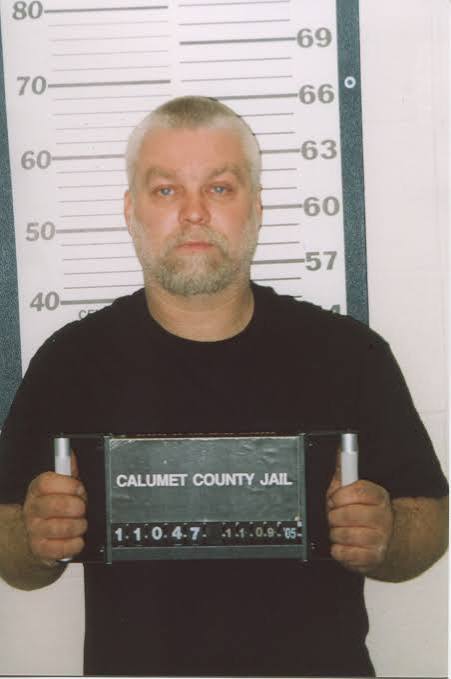
Steven Avery is a Wisconsin man whose criminal cases became widely known after the Netflix documentary series Making a Murderer. His history involves two very different legal outcomes: he was exonerated by DNA evidence after serving 18 years for a 1985 sexual assault he did not commit, and he was later convicted of the 2005 murder of photographer Teresa Halbach.
The distinction matters. Avery’s first conviction was overturned after DNA testing identified another man as the source of biological evidence. His later conviction remains in place. Avery has continued to challenge that conviction, but Wisconsin courts have denied his appeals. In September 2026, a judge reviewing his application for sentence commutation said shortening his sentence would be “entirely inappropriate.”
This article summarizes the public court record and major developments. It distinguishes proven court outcomes from Avery’s claims, prosecution arguments and the questions raised by the documentary series.
Steven Avery: Quick Facts
| Detail | Information |
|---|---|
| Name | Steven Allan Avery |
| Known for | Two Wisconsin criminal cases and the Netflix series Making a Murderer |
| State | Wisconsin, United States |
| First conviction | 1985 sexual assault, attempted murder and false imprisonment |
| First case outcome | Exonerated in 2003 after DNA evidence excluded him |
| Later conviction | 2007 conviction for first-degree intentional homicide in the death of Teresa Halbach |
| Sentence | Life in prison without the possibility of parole |
| Latest reported development | A judge opposed his 2026 request for sentence commutation |
The 1985 Case and DNA Exoneration
In July 1985, Penny Beerntsen was attacked while jogging near Lake Michigan in Manitowoc County, Wisconsin. Avery was identified as the assailant, arrested and later convicted of sexual assault, attempted murder and false imprisonment. He received a 32-year sentence.
The conviction relied heavily on eyewitness identification. Avery maintained that he was elsewhere when the attack occurred, and witnesses supported parts of his account. At the time, however, he was convicted and sent to prison.
Years later, the Wisconsin Innocence Project helped secure DNA testing of evidence from the case. The testing excluded Avery and led investigators to Gregory Allen, a different man whose DNA profile was in the FBI database. In September 2003, the charges were dismissed and Avery was released after serving about 18 years.
The Innocence Project describes Avery’s case as a DNA exoneration involving mistaken eyewitness identification and forensic evidence. The University of Wisconsin–Madison also reported that the DNA evidence conclusively established his innocence in the 1985 attack. His exoneration is a documented legal outcome, not a disputed theory.
The Lawsuit Against Manitowoc County
After his release, Avery filed a federal civil rights lawsuit seeking damages from Manitowoc County and others connected to the 1985 investigation. The case was settled in 2006 for $400,000. Avery’s lawyers and supporters later argued that the lawsuit gave local authorities a motive to frame him in the Halbach investigation.
That allegation became central to the public discussion of the later case and to Making a Murderer. Avery has maintained that he was framed. The state denied that claim, and the jury convicted him after a trial. The existence of the lawsuit and the timing of the later investigation are facts; the claim that authorities framed him is an allegation that has not resulted in the courts overturning his conviction.
The Teresa Halbach Case
Teresa Halbach was a 25-year-old photographer who worked for Auto Trader magazine. On October 31, 2005, she went to Avery’s family’s auto salvage property after an appointment to photograph a vehicle. She was reported missing, and investigators later focused on the salvage yard.
According to Wisconsin appellate court records, investigators found evidence including Halbach’s vehicle on the property, Avery’s blood in the vehicle, Halbach’s DNA on a bullet recovered from Avery’s garage, and her vehicle key in Avery’s trailer. The state also presented evidence about burned remains and personal items. Avery’s defense argued that investigators were biased and that evidence had been planted.
Avery was tried in 2007 in Calumet County. A jury found him guilty of first-degree intentional homicide and possession of a firearm by a felon. He was acquitted of mutilating a corpse. The court sentenced him to life in prison without the possibility of parole.
These findings are part of the court record. They should be described as the evidence presented and the jury’s verdict, rather than as proof that every question about the investigation has been resolved to everyone’s satisfaction. Avery continues to deny responsibility and has pursued post-conviction challenges.
Appeals and Attempts to Reopen the Case
Avery has made multiple appeals and post-conviction motions. His arguments have included challenges to searches, the admission or exclusion of evidence and the handling of potential alternative suspects. Wisconsin courts have rejected those arguments in successive decisions.
In January 2025, the Wisconsin Court of Appeals affirmed a lower court decision denying Avery an evidentiary hearing on a post-conviction motion, finding that his motion was insufficiently pleaded. The Wisconsin Supreme Court later declined to review that ruling. These decisions did not grant him a new trial, and his 2007 conviction remained in effect.
Avery’s supporters have continued to argue that new evidence or a different interpretation of the record should lead to another hearing. The state has opposed his requests. For readers, the key point is to separate a request for a hearing from a court decision granting relief: the former is an argument made by a party; the latter would change the legal status of the conviction. As of October 2026, no court had overturned the Halbach conviction.
Commutation Request and Current Status
In 2026, Avery applied to Wisconsin’s Commutation Advisory Board to have his sentence shortened. Commutation is different from an appeal: it can reduce a sentence but does not itself erase a conviction or establish innocence.
In September 2026, the judge assigned to Avery’s post-conviction case reviewed his application and the case file and advised that commutation would be “entirely inappropriate.” News reports said the advisory board was not required to take up the application and had not placed the case on its agenda at that time. The judge’s position is a recommendation, not a new criminal verdict.
Avery remains incarcerated while the legal and clemency processes continue. The Wisconsin Supreme Court’s refusal to review his 2025 appeal and the judge’s 2026 commutation recommendation are the most recent major developments located for this article.
Making a Murderer and Public Debate
The Netflix documentary Making a Murderer, released in 2015, brought Avery’s cases to a large international audience. It followed the 1985 exoneration and the later investigation and trial involving Halbach’s death. The series prompted viewers to examine police conduct, forensic evidence, eyewitness identification and the fairness of the trials.
Documentaries select and organize material to tell a story. The series became a starting point for public debate, but it is not a court ruling and does not replace the full trial record. Some evidence and context have been discussed beyond the series, and the courts have considered Avery’s arguments through formal appeals. A careful account should use the documentary as cultural context while checking claims against court decisions and primary records.
The case also shaped discussion about wrongful convictions. Avery’s first case demonstrates how mistaken identification and flawed investigative conclusions can contribute to a wrongful conviction. The Halbach case is legally separate: Avery was convicted after a jury trial, and that conviction has not been vacated.
Case Timeline
| Date | Event | Legal significance |
|---|---|---|
| July 1985 | Penny Beerntsen was attacked while jogging in Manitowoc County. | Avery was subsequently identified, arrested and prosecuted. |
| December 1985 | Avery was convicted of sexual assault, attempted murder and false imprisonment. | He received a 32-year prison sentence. |
| 2002–2003 | DNA testing was ordered and later excluded Avery as the source of biological evidence. | The testing pointed to Gregory Allen. |
| September 2003 | The 1985 charges were dismissed and Avery was released. | He was exonerated after serving about 18 years. |
| 2004–2006 | Avery sued Manitowoc County and others; the civil case settled for $400,000. | Supporters later cited the lawsuit when alleging a motive to frame him. |
| October 31, 2005 | Photographer Teresa Halbach visited the Avery salvage property. | Her disappearance led to a homicide investigation. |
| 2007 | A jury convicted Avery of first-degree intentional homicide and firearm possession. | He was sentenced to life without parole and acquitted of corpse mutilation. |
| 2015 | Making a Murderer brought the cases to wider public attention. | The series prompted debate, but did not change the conviction. |
| January–June 2025 | Wisconsin courts rejected a request for an evidentiary hearing and the state Supreme Court declined review. | The conviction remained in place. |
| September 2026 | A judge advised against Avery’s sentence commutation request. | The recommendation did not overturn the conviction or itself decide the board’s action. |
Frequently Asked Questions
Was Steven Avery exonerated?
Yes, in the 1985 sexual assault case. DNA testing excluded him and pointed to another man. That exoneration is separate from his later conviction in the Teresa Halbach case.
Why is Steven Avery in prison?
He is serving a life sentence without parole after a 2007 jury conviction for first-degree intentional homicide in the death of Teresa Halbach, along with a firearm-possession conviction.
Did Steven Avery kill Teresa Halbach?
A jury convicted Avery of Halbach’s murder, and the conviction remains in place. Avery denies responsibility and has challenged the case through appeals. This article reports the legal status rather than making an independent determination of guilt.
Has Steven Avery’s conviction been overturned?
No. Wisconsin courts have denied his appeals and post-conviction requests, and the conviction remained in place as of October 2026.
What is Steven Avery’s current legal status?
He remains incarcerated under a life sentence without parole. In 2026 he sought commutation, but the assigned judge advised against shortening the sentence.
What is Making a Murderer about?
The Netflix documentary series follows Avery’s 1985 wrongful conviction and exoneration, then examines the investigation and trial in the Halbach case. It prompted public debate but is not a substitute for court records.
Final Word
Steven Avery’s story cannot be accurately summarized as only a wrongful-conviction case or only a documentary controversy. He was exonerated by DNA evidence in the 1985 case after spending 18 years in prison. In a separate case, a jury convicted him of Teresa Halbach’s 2005 murder, and that conviction remains legally in force.
His later appeals have not resulted in a new trial or overturned verdict. His 2026 commutation application is a separate process and does not itself change the conviction. For updates, readers should rely on Wisconsin court records and reputable news coverage, while keeping allegations and court findings clearly distinguished.