

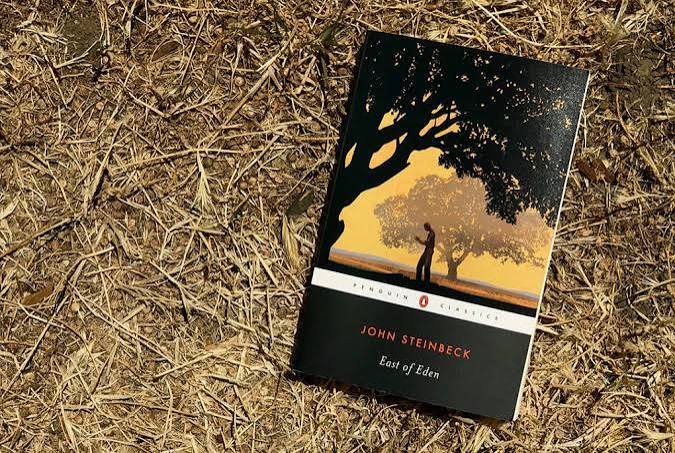
The book has inspired two major screen adaptations: Elia Kazan’s 1955 film starring James Dean, and a seven-episode Netflix limited series released in 2026. The film concentrates mainly on one part of the novel’s larger family story, while the newer adaptation gives the saga more room to unfold and places renewed attention on Cathy Ames, one of Steinbeck’s most complex characters.
East of Eden at a glance
| Detail | Information |
|---|---|
| Title | East of Eden |
| Author | John Steinbeck |
| First published | 1952 |
| Original publisher | Viking Press |
| Type of work | Novel and family saga |
| Main setting | Salinas Valley, California |
| Central families | The Trasks and the Hamiltons |
| Major literary reference | The biblical story of Cain and Abel |
| 1955 film director | Elia Kazan |
| 1955 film lead actor | James Dean as Cal Trask |
| 2026 limited series | Netflix adaptation, written by Zoe Kazan |
| Netflix series cast | Florence Pugh, Christopher Abbott, Mike Faist, Hoon Lee, and others |
| Major themes | Family, moral choice, rivalry, love, identity, and free will |
What is East of Eden about?
The novel tells the story of two families whose lives become closely connected in California’s Salinas Valley. The Hamiltons are modeled in part on Steinbeck’s maternal family, while the Trasks provide the book’s central multigenerational conflict. Their experiences echo the biblical story of Cain and Abel, especially through the tensions between brothers.
Steinbeck’s Trask family includes Adam and Charles, followed in the next generation by Adam’s twin sons, Cal and Aron. The brothers have different temperaments and different relationships with their father. As they grow older, love, resentment, and the desire for approval shape their choices. The novel does not treat family conflict as a simple contest between a good sibling and a bad one. Instead, it asks how people respond to inherited expectations and whether they can make choices that differ from those made before them.
Cathy Ames is another central figure. She is an intelligent and unsettling character whose actions affect the Trask family across many years. Steinbeck presents her as more than a plot device: her presence raises questions about cruelty, responsibility, and how much a person’s character can change. Samuel Hamilton, meanwhile, brings warmth, insight, and practical wisdom to the story. His friendship with Adam and his connection to the Trasks make him one of the novel’s moral centers.
The story spans years and follows births, losses, conflicts, and changes in the families’ fortunes. Its wide scope gives Steinbeck room to connect private family decisions with larger reflections on history and human nature. The novel is often described as a family saga, but it also works as a moral and philosophical story about the choices people make.
The meaning of “timshel”
One of the book’s best-known ideas is expressed through the Hebrew word timshel, often translated in the novel as “thou mayest.” The idea matters because it leaves room for human choice. Rather than presenting people as permanently controlled by inherited sin or family history, the novel suggests that they have the capacity to choose how they will act.
This idea is closely tied to the book’s treatment of the Cain and Abel story. In Steinbeck’s telling, the biblical reference does not simply divide people into fixed moral categories. It becomes a way to ask whether people are trapped by their past or able to take responsibility for their future. The question remains open throughout the family saga.
Setting and historical background
The Salinas Valley is more than a backdrop. Steinbeck uses its landscape, agriculture, towns, and changing communities to give the novel a strong sense of place. The setting connects the fictional families to the region where Steinbeck was born and raised. His descriptions of the valley also reflect his interest in the relationship between people and the environments in which they live.
The novel moves through the late nineteenth and early twentieth centuries. As the families grow and change, so does the world around them. Local life, economic pressures, migration, and shifting social expectations all form part of the story’s background. Steinbeck combines this larger historical movement with intimate family scenes, making the characters’ choices feel both personal and connected to their time.
Publication and John Steinbeck’s purpose
Viking Press published East of Eden in 1952. Steinbeck had worked on the idea for years, and the novel became one of his most ambitious books. It brought together the history of the Salinas Valley, a family story inspired in part by his own relatives, and his long-running interest in moral questions.
Steinbeck dedicated the book to his sons, Thom and John. He wanted to give them a story connected to their family history and the place where he grew up. The result was not a straightforward memoir: the Hamiltons draw on real family connections, but the book is a work of fiction with its own invented characters and events.
The novel received a mixed critical response when it first appeared, but it quickly attracted readers and became a lasting part of Steinbeck’s literary legacy. Penguin’s book description emphasizes the intertwined families and the novel’s questions about identity, love, and the effects of love’s absence. Steinbeck later received the Nobel Prize in Literature in 1962.
The 1955 film adaptation
Elia Kazan directed the 1955 film version of East of Eden, with James Dean playing Cal Trask. Julie Harris, Raymond Massey, Richard Davalos, and Jo Van Fleet also appeared in the cast. The film was released in 1955 and focuses mainly on the final section of Steinbeck’s novel, rather than attempting to adapt the full multigenerational story.
Dean’s performance helped make the film a lasting part of his screen legacy. He portrayed Cal as emotionally intense and hungry for his father’s approval. The film’s narrower focus lets it build around Cal’s relationship with Adam and Aron, but it necessarily leaves out much of the novel’s broader family history.
The American Film Institute’s catalog records Kazan as director, Paul Osborn as screenwriter, and Warner Bros. as the production company. The film received multiple Academy Award nominations. Jo Van Fleet won the Academy Award for Best Supporting Actress for her performance as Kate.
The 2026 Netflix adaptation
Netflix released a seven-episode limited-series adaptation of East of Eden on October 1, 2026. Zoe Kazan adapted the novel and served as co-showrunner with Jeb Stuart. Florence Pugh stars as Cathy Ames, with Christopher Abbott as Adam Trask and Mike Faist as Charles Trask. The cast also includes Hoon Lee, Tracy Letts, Martha Plimpton, Ciarán Hinds, Joseph Zada, and Joe Anders.
Netflix described the series as a modern interpretation of Steinbeck’s story, following the Trask family across generations and giving special attention to Cathy. A limited series has more screen time than a feature film, which allows the adaptation to explore more of the family saga. Even so, adapting a long novel for television involves decisions about which characters and storylines receive the most attention.
The project also has a connection to the 1955 film: Zoe Kazan is the granddaughter of director Elia Kazan. Netflix’s adaptation is a separate interpretation of Steinbeck’s novel, rather than a remake of the earlier movie. It offers viewers another way into the book’s characters and themes while making its own choices about structure and emphasis.
Why the novel continues to attract readers
East of Eden continues to be read because it combines a sweeping family story with questions that remain relevant. People may recognize the pressure to live up to a parent’s expectations, the way sibling rivalry can change relationships, or the difficulty of separating one’s identity from family history.
The novel is also notable for refusing to make moral choice feel easy. Its characters are complicated, and the consequences of their actions affect people beyond themselves. Steinbeck’s use of biblical themes gives the story a familiar foundation, but the book’s central concern is the possibility of choice in ordinary human lives.
The newer Netflix adaptation has brought fresh attention to the novel. Netflix reported in October 2026 that the series had helped drive renewed interest in the book and increased sales. Screen adaptations can introduce classic works to audiences who may not otherwise encounter them, while also prompting readers to compare the original story with its new interpretation.
Frequently asked questions
Who wrote East of Eden?
John Steinbeck wrote East of Eden. Viking Press published the novel in 1952.
What is East of Eden about?
It is a multigenerational family saga about the Trask and Hamilton families in California’s Salinas Valley. The story explores family conflict, love, identity, moral responsibility, and the possibility of choosing one’s own path.
What does “timshel” mean in East of Eden?
In the novel, timshel is translated as “thou mayest.” It represents the idea that people have the capacity to choose how they act rather than being entirely controlled by inherited history or character.
Who played Cal in the 1955 East of Eden movie?
James Dean played Cal Trask in Elia Kazan’s 1955 film adaptation.
Is the 1955 movie the same as the book?
No. The 1955 movie focuses mainly on the final part of the novel and does not cover the full multigenerational saga.
Is there a new East of Eden series?
Yes. Netflix released a seven-episode adaptation on October 1, 2026. Zoe Kazan adapted the novel, and Florence Pugh stars as Cathy Ames.
Who plays Cathy Ames in the Netflix series?
Florence Pugh plays Cathy Ames in the 2026 Netflix limited series.
Final Word
East of Eden remains one of John Steinbeck’s best-known works because it combines a sweeping family history with an enduring question: how much control do people have over the lives they inherit? The novel’s Trasks and Hamiltons, its Salinas Valley setting, and its exploration of choice have supported multiple interpretations. The 1955 James Dean film and Netflix’s 2026 series each offer a different way to experience Steinbeck’s story, while the original novel remains the fullest account of its families and ideas.