

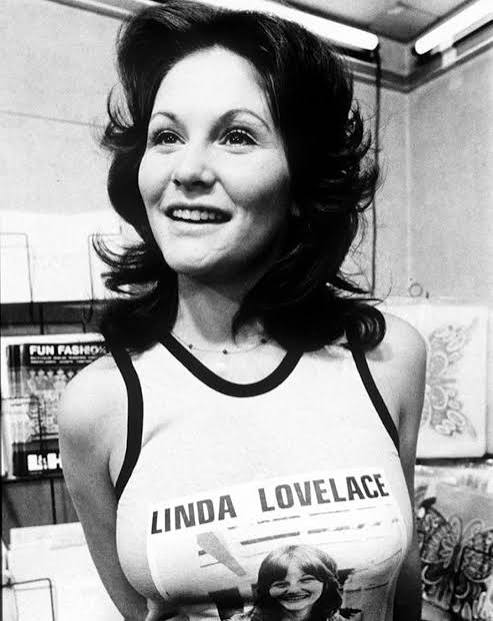
Her story is difficult to reduce to a single label. Lovelace’s fame was tied to a film that became a cultural phenomenon, while her later public life focused on describing the harm she said she experienced. Accounts of her life should make clear when a statement comes from her own testimony or memoir, and avoid presenting disputed claims or unverified details as settled fact.
Linda Lovelace at a Glance
| Detail | Information |
|---|---|
| Birth name | Linda Susan Boreman |
| Professional name | Linda Lovelace |
| Born | January 10, 1949 |
| Birthplace | New York City, New York |
| Died | April 22, 2002, in Denver, Colorado |
| Age at death | 53 |
| Known for | Her role in the 1972 film Deep Throat and later anti-pornography activism |
| Memoir | Ordeal (1980) |
| First husband | Chuck Traynor |
| Second husband | Larry Marchiano |
| Children | Two, with Larry Marchiano |
| Later public role | Speaker and activist who testified about pornography and coercion |
Early Life
Boreman was born in New York City on January 10, 1949. She grew up in a Catholic family and attended Catholic schools. Public accounts of her early years often describe a strict home environment, but detailed stories about her childhood vary by source. A responsible biography should avoid presenting every repeated anecdote as independently verified.
As a young adult, Boreman met Chuck Traynor, who became her first husband and manager. The relationship would later become central to her public account of how she entered the adult-film business. In her 1980 memoir, Ordeal, she described Traynor as abusive and said that he forced her into pornography. Those are claims Boreman made about her own experience; they are not details to sensationalize or treat as entertainment.
Deep Throat and Sudden Fame
In 1972, Boreman appeared under the name Linda Lovelace in Deep Throat, directed by Gerard Damiano. The low-budget film became one of the most widely discussed adult movies of its era. It attracted attention beyond its intended audience and became associated with what journalists called “porno chic,” a period when adult films were discussed in mainstream newspapers and social settings. The Guardian’s obituary described how Deep Throat helped make adult cinema briefly fashionable in some cultural circles.
The film’s notoriety made Lovelace recognizable, but fame did not necessarily mean financial security or control over her career. In its 2002 obituary, the Associated Press reported that Boreman said she received no payment from the film and that Traynor received $1,250. Claims about the film’s total earnings have varied widely over the years, so large box-office figures should be treated cautiously rather than repeated as established fact.
After Deep Throat, Lovelace appeared in several other films, including Deep Throat Part II and Linda Lovelace for President. Her screen career was relatively short. The public image created by the first film, however, followed her long after she left the industry.
Her Account of Coercion and Abuse
After separating from Traynor, Boreman began speaking publicly about what she said had happened during their relationship and her time in pornography. In Ordeal, published in 1980, she described abuse and coercion and said that she had not freely chosen to make Deep Throat. She later repeated her account in public appearances and congressional testimony.
In 1984, Boreman testified before a Senate panel examining sexual exploitation. United Press International reported that she told the panel Traynor had used threats and violence to force her to appear in the film. She described the film as having been made against her will. Her testimony became a prominent part of the debate about pornography, consent, exploitation, and the rights of performers. UPI’s report on her testimony records what she told the panel.
Her account became politically influential and also contentious. The debates surrounding pornography often placed her story at the center of arguments about censorship and free expression. Those arguments could overshadow the person making the testimony. It is important to report her statements accurately, attribute them to her, and distinguish them from broader conclusions about every performer or every production.
Later reporting noted that Lovelace’s statements about her past and public identity were not always presented in exactly the same way over time. The Guardian’s obituary discussed her changing public accounts and her claim that earlier books about her had been ghostwritten. This complexity is a reason to consult dated interviews and records rather than flattening her life into a simple narrative.
Activism and Public Testimony
Following her departure from adult films, Lovelace became an anti-pornography speaker. She testified at hearings and appeared at events organized by women’s groups opposed to pornography. Her account was used in public campaigns and legislative debates about the effects of sexually explicit media.
Her testimony contributed to arguments that pornography could involve abuse and exploitation, particularly when performers lacked power or control over production. The broader political debate included strong disagreements about how to address these concerns while protecting civil liberties. Lovelace’s experiences were her own, and they should not be treated as proof that every performer had the same experience.
In later years, some reports described her as having a more complicated position than the label “anti-porn activist” alone suggests. The Associated Press obituary quoted her reflecting on survival and her past, while The Guardian noted that she continued to be a highly debated figure. These accounts are reminders that people can change how they speak about their own history and how they understand their public role.
Personal Life
Boreman divorced Traynor in the early 1970s. In 1974, she married Larry Marchiano, with whom she had two children. The family later moved to Colorado. Boreman and Marchiano divorced in 1996, though the AP obituary reported that he described her as a close friend at the time of her death.
Unlike her public persona, much of Boreman’s family life remained private. Her children were not public figures, and there is little value in repeating personal details that do not help explain her work or public advocacy. The most reliably reported facts are that she had two children with Marchiano and that her family was with her during her final hospitalization.
Health and Death
On April 3, 2002, Boreman was seriously injured in a car crash in Denver. She was hospitalized with severe trauma and internal injuries. She died on April 22, 2002, at age 53 after being taken off life support. The Associated Press reported that her ex-husband and their two adult children were at the hospital when she died.
Her death prompted renewed coverage of the contrast between her fame as the star of Deep Throat and her later work describing abuse and exploitation. Obituaries revisited both her contribution to the film’s cultural impact and the claims she made about the conditions under which she performed.
Legacy and Cultural Impact
Linda Lovelace remains a complicated figure in American film and social history. The popularity of Deep Throat made her a symbol of changing attitudes toward adult entertainment in the early 1970s. Her later testimony, meanwhile, became part of a national conversation about coercion, consent, censorship, and the treatment of women in pornography.
Her story also demonstrates how a public image can be shaped by forces outside a person’s control. The name “Linda Lovelace” became attached to a film and a cultural moment, while Boreman later used her voice to challenge the way that image was created and what it concealed. Her life cannot be understood only through the movie that made her famous or only through the political causes that later cited her story.
The 2013 film Lovelace, starring Amanda Seyfried, brought renewed attention to her life. Like any dramatization, it is an interpretation rather than a substitute for historical sources. Readers looking for an accurate account should compare the film with Boreman’s memoir, contemporary reporting, her public testimony, and later biographies.
Frequently Asked Questions
Who was Linda Lovelace?
Linda Lovelace was the stage name of Linda Susan Boreman, an American performer who became famous for the 1972 film Deep Throat. She later became an anti-pornography activist and spoke publicly about abuse and coercion she said she experienced.
What was Linda Lovelace’s real name?
Her birth name was Linda Susan Boreman.
How old was Linda Lovelace when she died?
She was 53. She died on April 22, 2002, from injuries sustained in a car crash earlier that month.
What was Deep Throat?
Deep Throat was a 1972 adult film directed by Gerard Damiano. Lovelace’s role made her famous and the film became a major subject of mainstream cultural discussion.
What did Linda Lovelace say about making the film?
In her memoir Ordeal and later testimony, she said that her first husband, Chuck Traynor, abused and coerced her into appearing in pornography, including Deep Throat. These statements should be attributed to her account.
Did Linda Lovelace write Ordeal?
Ordeal was published under Lovelace’s name in 1980 and presented her account of her life and relationship with Traynor. Later reporting discussed the role of collaborators and ghostwriting in books published under her name.
Was Linda Lovelace married and did she have children?
She was first married to Chuck Traynor and later married Larry Marchiano. She and Marchiano had two children.
What is Linda Lovelace remembered for?
She is remembered both for starring in Deep Throat and for later speaking publicly about coercion and abuse in the adult-film industry. Her legacy remains part of debates about pornography, consent, exploitation, and free expression.
Final Word
Linda Lovelace’s life moved through fame, personal conflict, public testimony, and later reflection. Her role in Deep Throat made her widely known, but her later account of abuse and coercion changed how many people understood that fame. A careful biography must treat her statements seriously, attribute claims clearly, and recognize that her life cannot be reduced to a film or a political argument.
She died in 2002 at age 53, but discussion of her story continues because it raises enduring questions about consent, power, and the way entertainment industries represent the people who work in them.