

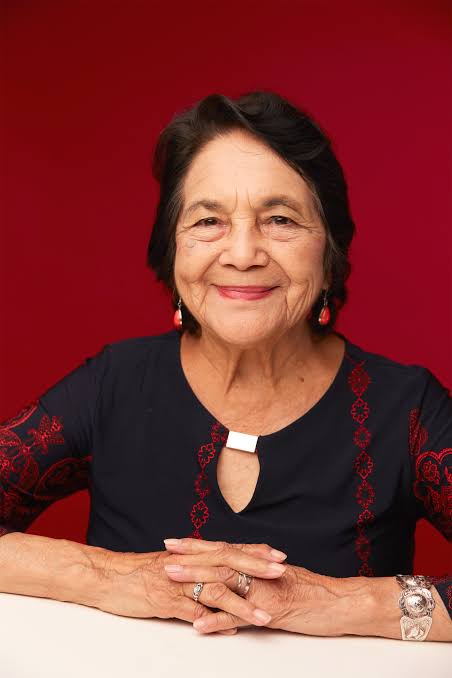
Dolores Huerta was an American labor leader and civil rights activist whose organizing helped change conditions for farmworkers in California and across the United States. She co-founded the National Farm Workers Association with César Chávez in 1962. The organization later became part of the United Farm Workers (UFW), one of the most influential farmworker unions in the country.
Huerta helped organize strikes and boycotts, negotiate contracts, and advocate for legal protections for agricultural workers. She also worked on voter registration, immigrant rights, women’s rights, and broader community organizing. Her rallying cry, “¡Sí, se puede!”—“Yes, we can”—became a lasting slogan for social and political movements.
Huerta died at her home in California on October 28, 2026, at age 96, according to her family and news reports. Her decades of organizing left a lasting mark on the labor movement. In 2026, she also shared a painful account of sexual abuse by Chávez in the 1960s, adding a difficult and deeply personal dimension to the history of the movement they had helped build. Associated Press obituary
Dolores Huerta at a Glance
| Detail | Information |
|---|---|
| Full name | Dolores Clara Fernández Huerta |
| Born | April 10, 1930 |
| Birthplace | Dawson, New Mexico |
| Died | October 28, 2026 |
| Age at death | 96 |
| Profession | Labor organizer and civil rights activist |
| Best known for | Co-founding the National Farm Workers Association and helping lead the United Farm Workers |
| Major campaign | Delano grape strike and national grape boycott |
| Famous slogan | “¡Sí, se puede!” |
| Foundation | Dolores Huerta Foundation, established in 2003 |
| Major award | Presidential Medal of Freedom, 2012 |
| Education | Teaching credential from Stockton’s Delta College |
| Family | Mother of 11 children |
Early Life and Education
Dolores Clara Fernández was born on April 10, 1930, in Dawson, New Mexico. Her parents were Alicia Chávez and Juan Fernández. Her father worked as a farmworker and miner, was active in the labor movement, and later served in the New Mexico legislature. When Huerta was young, her parents divorced, and she moved with her mother and brothers to Stockton, California. National Park Service biography
Her mother, Alicia, became a business owner and was involved in community life. Huerta later credited her mother’s generosity and example with influencing her commitment to helping others. Stockton was home to working families from many backgrounds, and Huerta saw the economic hardship faced by farmworkers and their children.
Huerta earned a teaching credential from Delta College in Stockton. She briefly taught school, where she saw many children of farmworkers arrive hungry or without basic supplies. She came to believe that organizing their parents for better wages and conditions could address the causes of the children’s hardship. She left teaching and began a career in community organizing.
Early Community Organizing
In the 1950s, Huerta became involved with the Community Service Organization (CSO), a grassroots group working on civil rights and economic issues for Latino communities. She helped register voters and advocated for policies affecting workers and families. In 1960, she founded the Agricultural Workers Association, which focused on farmworker rights and community participation.
This early organizing helped Huerta develop skills she would later use in the farmworker movement: building local support, lobbying lawmakers, communicating with workers, and coordinating campaigns across communities. Her work connected labor concerns to voting rights, public services, and political representation.
Founding the Farmworker Association
Huerta met César Chávez through the CSO. They shared an interest in organizing agricultural workers, whose labor was essential but whose pay and working conditions were often poor. In 1962, Huerta and Chávez left the CSO and founded the National Farm Workers Association (NFWA).
The NFWA organized farmworkers, many of whom faced low wages, long hours, unsafe conditions, and limited access to healthcare or job security. The association provided a structure for workers to organize collectively and make demands of growers.
In 1965, Filipino farmworkers in Delano, California, began a strike against grape growers. Their union, the Agricultural Workers Organizing Committee, asked the NFWA to join the effort. The strike and subsequent boycott brought farmworker conditions to national attention. The NFWA later joined with the Filipino-led organization, helping form the United Farm Workers.
The Delano Grape Strike and Boycott
Huerta became a key organizer and negotiator during the grape campaign. The movement called on consumers to stop buying table grapes in support of farmworkers seeking better wages and working conditions. The boycott extended beyond California, with supporters organizing in cities across the country.
Huerta helped lead the campaign and negotiated with growers. In 1970, the UFW secured collective bargaining agreements with major table-grape growers, an important achievement for workers who had previously lacked comparable union protections. The National Park Service credits Huerta with directing boycott efforts and serving as a lead negotiator. National Park Service account
The campaign showed how consumer action could support workers who had limited direct power over employers. By encouraging people not to buy grapes, organizers made the working conditions in agricultural fields a national issue. The boycott also demonstrated Huerta’s skill in connecting local labor disputes with a broad public campaign.
Legislation and Labor Rights
Huerta’s organizing extended into political advocacy. She lobbied for legislation and worked to secure protections for farmworkers, including disability insurance and collective bargaining rights. The 1975 California Agricultural Labor Relations Act established a framework for farmworkers to organize and bargain collectively in the state.
The law was a significant change in a sector where workers had long been excluded from many protections available to other employees. Huerta’s role included organizing, negotiation, and public advocacy; the broader movement involved many workers and organizers, including Filipino labor leader Larry Itliong and other UFW members.
Huerta’s career reflected a view of labor rights as part of a larger struggle for dignity and political voice. She advocated for immigrant communities, women, people of color, young people, and LGBTQ+ rights throughout her public life.
“¡Sí, se puede!”
Huerta is closely associated with the phrase “¡Sí, se puede!”—often translated as “Yes, we can.” The slogan captured the UFW’s belief in collective action and became widely used beyond the farmworker movement. It was later adopted by political campaigns and social movements, including Barack Obama’s 2008 presidential campaign.
Huerta’s slogan became especially recognizable because it expressed the core of her organizing philosophy: people who work together can influence institutions and improve their conditions. Its popularity also reflects how labor and civil rights language can travel across generations and causes.
Arrests, Injuries, and Risks of Activism
Huerta faced personal risks during her organizing career. She was arrested many times during demonstrations and was seriously injured by police during a 1988 protest in San Francisco. The National Park Service reports that she suffered broken ribs and a ruptured spleen after officers struck her during a demonstration.
The incident led to public scrutiny of police conduct and underscored the dangers faced by activists at protests. Huerta continued to organize after recovering. Her activism involved both direct action—such as picket lines and demonstrations—and institutional work through lobbying and negotiations.
Dolores Huerta Foundation
In 2003, Huerta established the Dolores Huerta Foundation to continue grassroots community organizing and develop future leaders. The foundation works on voter participation, leadership development, and community campaigns. It builds on the organizing methods Huerta used throughout her career: local engagement, training, and collective advocacy. Dolores Huerta Foundation overview
Huerta remained active well into her 90s. She spoke at events, joined demonstrations, and advocated for working people, women, immigrants, and young leaders. Her family’s foundation said she died at home in California at age 96. Family statement
Awards and Recognition
Huerta received numerous honors for her work. In 2012, President Barack Obama awarded her the Presidential Medal of Freedom, the highest civilian honor in the United States. The White House cited her role in co-founding the farmworkers’ association and her influence on California labor protections. White House archive
She was inducted into the National Women’s Hall of Fame in 1993 and received the Eleanor Roosevelt Human Rights Award in 1998. Her influence is also recognized through public art, educational institutions, and community programs named in her honor.
A Difficult New Chapter in the Movement’s History
In 2026, Huerta publicly described being sexually abused by Chávez in the 1960s. The account included that the abuse resulted in two children who were raised by others. The Associated Press reported on her disclosure and quoted her discussing the personal pain she had carried. Associated Press report
This revelation prompted renewed attention to the history of the farmworker movement and to the experiences of women within it. It is possible to recognize Huerta’s contributions to labor and civil rights while also acknowledging the abuse she said she experienced. These facts belong in a full account of her life; neither should erase the other.
Frequently Asked Questions
Who was Dolores Huerta?
Dolores Huerta was an American labor organizer and civil rights activist. She co-founded the National Farm Workers Association, which later became part of the United Farm Workers.
When did Dolores Huerta die?
She died on October 28, 2026, at age 96. Her family said she died at home in California.
What was Dolores Huerta known for?
She was known for organizing farmworkers, helping lead the Delano grape strike and boycott, advocating for labor protections, and popularizing the slogan “¡Sí, se puede!”
Did Dolores Huerta co-found the United Farm Workers?
She co-founded the National Farm Workers Association with César Chávez in 1962. That organization later joined with other farmworker organizers and became part of the United Farm Workers.
What does “¡Sí, se puede!” mean?
The phrase means “Yes, we can.” It became a rallying cry for the farmworker movement and later for other political and social campaigns.
What awards did Dolores Huerta receive?
Her honors included the Presidential Medal of Freedom, the Eleanor Roosevelt Human Rights Award, and induction into the National Women’s Hall of Fame.
What was the Dolores Huerta Foundation?
It is a community-organizing and leadership-development organization founded by Huerta in 2003. Its work includes voter engagement and grassroots community campaigns.
What did Dolores Huerta reveal in 2026?
Huerta said she had been sexually abused by César Chávez in the 1960s and that the abuse resulted in two children. Her account became part of a broader public reckoning with the movement’s history.
Final Word
Dolores Huerta’s legacy includes decades of organizing for farmworkers, helping build the United Farm Workers, and advancing labor and civil rights. Her work helped bring farmworker conditions into public view and contributed to stronger protections for agricultural workers.
Her life story also includes personal hardship and, in 2026, a disclosure of sexual abuse by a fellow movement leader. A full remembrance can honor Huerta’s achievements while acknowledging that painful history. Her enduring call—“¡Sí, se puede!”—continues to express the power she believed people could create when they organized together.