

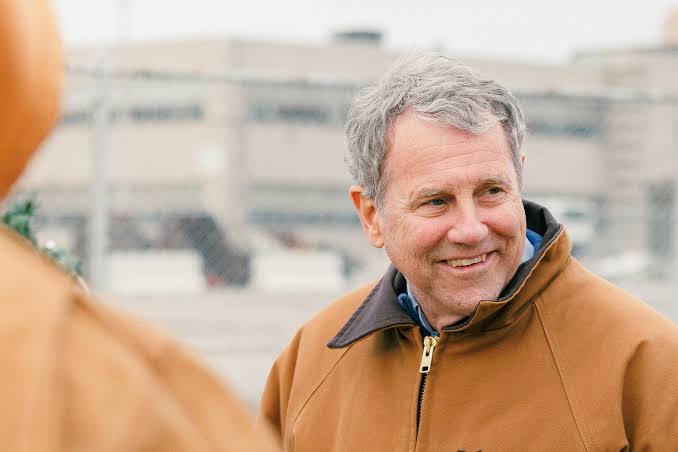
Sherrod Brown is an American politician from Ohio who served in the U.S. Senate from 2007 through 2025. A Democrat, he has built his public identity around the idea of the “Dignity of Work,” advocating for workers, organized labor, manufacturing communities, and policies he argues should help working families. Before his Senate career, Brown served in the Ohio House of Representatives, as Ohio secretary of state, and in the U.S. House.
Brown lost his 2024 Senate reelection campaign to Republican Bernie Moreno. He returned to the ballot in 2026 as the Democratic nominee in Ohio’s special U.S. Senate election, facing Republican incumbent Jon Husted. Alongside his campaign, Brown launched the Dignity of Work Institute in 2025, an organization focused on workers and the economy.
Sherrod Brown: Quick Facts
| Detail | Information |
|---|---|
| Full name | Sherrod Campbell Brown |
| Born | November 9, 1952 |
| Birthplace | Mansfield, Ohio |
| Political party | Democratic Party |
| Known for | Representing Ohio in the U.S. Senate and advocating for workers |
| U.S. senator from Ohio | January 3, 2007–January 3, 2025 |
| Earlier elected roles | Ohio state representative, Ohio secretary of state, U.S. representative |
| Education | Yale University and Ohio State University |
| Spouse | Connie Schultz |
| 2026 campaign | Democratic nominee for the U.S. Senate in Ohio’s special election |
Early Life and Education
Sherrod Brown was born in Mansfield, Ohio, on November 9, 1952. He grew up in the city and has often connected his political outlook to the experiences of Ohio workers and communities affected by changes in manufacturing and trade. His public message has emphasized the importance of stable jobs, fair wages, and the value of work in people’s lives.
Brown attended Yale University, where he earned a bachelor’s degree in 1974. He later completed a master’s degree at Ohio State University in 1981. Before entering Congress, he taught at Ohio State’s Mansfield campus. His education and early work in Ohio helped establish the state as the center of his political life.
Beginning in Ohio Politics
Brown entered elected office in the 1970s. He served in the Ohio House of Representatives from 1975 to 1982. He was then elected Ohio secretary of state, serving from 1983 through 1991. The role made him responsible for state-level administrative duties, including election-related responsibilities.
After leaving the secretary of state’s office, Brown continued his political career at the national level. Ohio voters elected him to the U.S. House of Representatives in 1992. He represented Ohio in the House from January 1993 until January 2007, winning reelection six times.
U.S. House of Representatives
During his time in the House, Brown represented Ohio for seven consecutive terms. His congressional service brought him into national debates on trade, manufacturing, labor, health care, and economic policy. He became associated with arguments that federal policy should give greater weight to workers and communities affected by economic change.
Brown’s positions on trade were central to his political identity. He criticized trade agreements that he believed encouraged companies to move jobs overseas or weakened worker protections. Supporters viewed this approach as a defense of manufacturing communities; critics disagreed with aspects of his policy proposals and their potential economic effects.
U.S. Senate Career
In 2006, Brown ran for the U.S. Senate and defeated Republican incumbent Mike DeWine. He took office in January 2007. Ohio voters reelected him in 2012 and 2018, giving him three terms in the Senate.
Brown served on several committees and became chair of the Senate Committee on Banking, Housing, and Urban Affairs during the 117th and 118th Congresses. His committee leadership placed him in a prominent role in debates about financial regulation, housing, consumer protection, and the banking system.
Across his Senate years, Brown regularly described his approach as centered on the “Dignity of Work.” He argued that people should be able to support themselves through their work and that economic policy should consider workers, not only corporations or financial markets. His legislative work and public statements often focused on pensions, wages, manufacturing, health care costs, and consumer protections.
2024 Election and Leaving the Senate
Brown sought a fourth Senate term in 2024, facing Republican Bernie Moreno. The race was one of the most closely watched contests of the election cycle because it could affect control of the Senate. Brown lost the general election, ending his Senate service on January 3, 2025. The U.S. Senate’s official historical roster lists his term as running from 2007 to 2025.
After the election, Brown returned to private life and began developing a new organization centered on his long-standing economic message. In March 2025, he launched the Dignity of Work Institute. Harvard University’s Institute of Politics later described the organization as focused on the people who make the country work and on an economy that values their labor.
2026 Ohio Senate Campaign
Brown reentered electoral politics in 2026. He won the Democratic nomination for Ohio’s special U.S. Senate election and is challenging Republican Jon Husted, who was appointed to the seat after J.D. Vance left the Senate to become vice president. Brown’s campaign has returned to themes that have defined his career, particularly worker concerns and the economic pressures facing Ohio families.
The election is scheduled for November 3, 2026. As of this article’s publication, Brown is a candidate and the outcome has not yet been decided. He should therefore be described as a former senator and current candidate, not as Ohio’s sitting senator. Readers should check official election results after the election for the final outcome.
Political Views and the “Dignity of Work”
The phrase “Dignity of Work” summarizes a recurring theme in Brown’s speeches and political work. He has argued that economic policy should value the contributions of workers across occupations and that people should have access to jobs that provide security and a fair standard of living.
That outlook has informed his positions on trade, labor rights, pensions, and manufacturing. Brown has supported stronger worker protections and criticized arrangements he believes shift economic risk onto employees. His approach has appealed to some voters who feel that political and economic institutions have not adequately represented working communities. Others have challenged his prescriptions or disagreed with his broader policy agenda.
Brown’s career also reflects the political complexity of Ohio. The state has elected Democrats and Republicans to statewide office, and its voting patterns have shifted over time. Brown won statewide races for many years, but he lost in 2024 during a cycle in which Ohio backed Republican candidates in other major contests.
Personal Life and Family
Brown is married to Connie Schultz, a journalist, author, and Pulitzer Prize-winning columnist. Schultz has written about social and political issues and has been a public presence alongside Brown during his political career. The couple lives in Ohio and has a blended family that includes three daughters, a son, and grandchildren.
Brown’s public biography often ties his personal background to his political focus on Ohio and working people. He has described growing up in Mansfield as formative to his understanding of the state’s economic and community concerns.
Sherrod Brown Career Timeline
| Year or period | Position or event | Details |
|---|---|---|
| 1952 | Born | Born in Mansfield, Ohio. |
| 1974 | Yale University | Earned a bachelor’s degree. |
| 1975–1982 | Ohio House of Representatives | Served as a state representative. |
| 1979–1981 | Ohio State University, Mansfield | Worked as a faculty member. |
| 1981 | Ohio State University | Earned a master’s degree. |
| 1983–1991 | Ohio secretary of state | Served as the state’s chief elections and records officer. |
| 1993–2007 | U.S. House of Representatives | Represented Ohio for seven terms. |
| 2007–2025 | U.S. Senate | Represented Ohio for three terms. |
| 2025 | Dignity of Work Institute | Launched an organization focused on workers and the economy. |
| 2026 | Ohio special Senate election | Won the Democratic nomination and is running against Jon Husted. |
Frequently Asked Questions
Who is Sherrod Brown?
Sherrod Brown is an Ohio Democrat who served in the U.S. Senate from 2007 to 2025. He previously served in the Ohio House, as Ohio secretary of state, and in the U.S. House of Representatives.
Is Sherrod Brown still a U.S. senator?
No. Brown’s Senate service ended on January 3, 2025. He is the Democratic nominee in Ohio’s 2026 special Senate election.
Who defeated Sherrod Brown in 2024?
Republican Bernie Moreno defeated Brown in Ohio’s 2024 U.S. Senate election.
What is the Dignity of Work Institute?
Brown launched the Dignity of Work Institute in March 2025. It focuses on workers and the goal of creating an economy that values people’s work.
Who is Sherrod Brown’s wife?
Brown is married to Connie Schultz, a journalist, author, and Pulitzer Prize-winning columnist.
Where did Sherrod Brown go to college?
He earned a bachelor’s degree from Yale University in 1974 and a master’s degree from Ohio State University in 1981.
What does Sherrod Brown mean by “Dignity of Work”?
It is a phrase Brown uses for the idea that work should be valued and that people should be able to earn a secure living through their jobs. It is a central theme in his political career and the institute he launched in 2025.
Who is Sherrod Brown running against in 2026?
Brown is running against Republican Jon Husted in Ohio’s 2026 special U.S. Senate election. The election is scheduled for November 3, 2026, and its result was not yet known when this article was prepared.
Final Word
Sherrod Brown’s career spans state government, the U.S. House, and three terms in the Senate. His politics have consistently emphasized workers, manufacturing, and economic security, themes he now advances through the Dignity of Work Institute and his 2026 Senate campaign. His long record in Ohio politics makes him a significant figure in the state’s public life, even after his 2024 Senate defeat.