

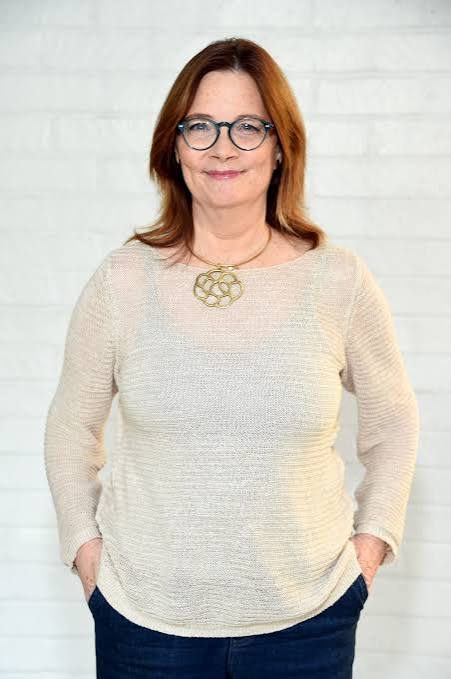
Ann Hornaday was an American film critic, journalist, and author known for her long career at The Washington Post. She wrote reviews and essays that helped readers look closely at how movies are made and what they communicate. Her work earned her recognition as a 2008 Pulitzer Prize finalist in criticism, and she wrote the book Talking Pictures: How to Watch Movies.
Hornaday died in Baltimore on October 18, 2026, at age 66. Her career included newspaper criticism, magazine writing, television appearances, and public conversations about film. This biography summarizes her life and work using published reporting and institutional sources.
Who was Ann Hornaday?
Ann Mills Hornaday was a film critic whose writing brought together detailed film knowledge and an accessible style. She joined The Washington Post in 2002 and wrote about movies for more than two decades. The Post described her reviews as informed and engaging, while the Pulitzer Prize organization recognized her work as a finalist in criticism in 2008.
Hornaday’s criticism considered more than whether a movie was entertaining. She wrote about the choices behind a film, including its screenplay, performances, direction, editing, and production. She also examined movies as cultural works that can influence how audiences understand history and society.
Early life and education
Hornaday was born in Iowa City, Iowa, on March 9, 1960, and grew up in Des Moines. She was adopted at birth by William R. Hornaday Jr. and Mary Mills Hornaday. She attended Smith College in Northampton, Massachusetts, where she studied government and graduated in 1982.
Her education was in government rather than film studies. After college, she moved to New York and began working in journalism. She spent two years at Ms. magazine as a researcher and editorial assistant, including work as an assistant to the magazine’s co-founder, Gloria Steinem. She later freelanced for publications including The New York Times and Premiere.
Building a career in film criticism
Hornaday’s first major newspaper film-critic position was at the Austin American-Statesman, where she worked from 1995 to 1997. She then became a film critic at The Baltimore Sun. In 2002, she joined The Washington Post, where she became one of the paper’s most recognizable voices on movies.
Her reviews were known for being thoughtful without being overly academic. She approached films as a knowledgeable viewer who wanted to explain why a movie worked, where it fell short, and what its choices meant. She wrote about major studio releases, independent films, documentaries, filmmakers, and the broader culture around cinema.
Hornaday also emphasized the collaborative nature of filmmaking. Her writing recognized that movies are shaped by many creative and technical contributions, from acting and writing to editing, sound, and design. That perspective informed both her reviews and her later book about how to watch films more carefully.
Pulitzer Prize finalist recognition
In 2008, Hornaday was named a finalist for the Pulitzer Prize in Criticism. The Pulitzer organization cited her movie reviews and essays for their research and accessible style. She did not win the award that year, but the finalist recognition reflected the quality and influence of her work.
Her criticism ranged from close readings of individual films to broader essays about cinema’s place in public life. She wrote about how movies shape collective memory and how film can blend invention with recognizable historical realities. Her work often encouraged readers to think beyond plot and performance and ask what a movie was trying to accomplish.
Talking Pictures: How to Watch Movies
Hornaday published Talking Pictures: How to Watch Movies in 2017. The book takes readers through the filmmaking process, from screenplay and casting to editing and sound. It offers a practical way to pay attention to the decisions that make a film feel coherent, moving, or memorable.
The book reflects Hornaday’s belief that audiences can enjoy movies while also thinking more deeply about them. She presented film appreciation as something open to curious viewers, not only specialists. Readers can use its framework to notice how a script sets up a story, how performances shape character, and how visual and sound choices guide attention.
Talking Pictures also made Hornaday’s critical approach available beyond newspaper reviews. Instead of only offering judgments about particular films, she explained tools audiences could apply to any movie they watched.
Her writing beyond reviews
Hornaday’s work included profiles of actors and filmmakers, essays about movie history, and reporting on the film industry. She wrote about movie theaters, filming locations, and the culture surrounding Hollywood. She also addressed difficult topics, including sexism and exploitation in the entertainment business.
Her criticism was not limited to praise or dismissal. She often tried to understand what a filmmaker intended, whether the film achieved that intention, and whether the intention was worthwhile. This approach gave readers context for her conclusions and made her reviews useful even to people who disagreed with her opinions.
Hornaday also appeared as a film reviewer on PBS NewsHour and participated in public discussions about movies. She enjoyed talking with readers and fellow filmgoers, treating criticism as part of a shared conversation rather than a one-way verdict.
Personal life and faith
Hornaday lived in Baltimore with her family. She was married to Dennis Greenia and had a daughter, Victoria, and a stepdaughter, Leila. She was also involved with the Episcopal Cathedral of the Incarnation in Baltimore, where she was a parishioner and Sunday school teacher.
In a 2014 first-person essay, Hornaday wrote about the relationship between her Christian faith and her work as a film critic. She described the personal tensions and moments of grace involved in holding both roles. Her writing on faith was one example of her willingness to connect cultural criticism with her own experiences and values.
Ann Hornaday’s final work
Before her death, Hornaday completed work on a book about the making of All the President’s Men, the 1976 film about Washington Post reporters Bob Woodward and Carl Bernstein and their reporting on Watergate. She had previously written about the film’s collaborative craft and its importance to journalism and cinema.
The book is tentatively scheduled for publication in 2028. It continues her interest in how movies are built and how they preserve or shape cultural memory. The project also connects directly to her own professional home at The Washington Post.
Ann Hornaday biography at a glance
| Detail | Information |
|---|---|
| Full name | Ann Mills Hornaday |
| Born | March 9, 1960 |
| Birthplace | Iowa City, Iowa, United States |
| Died | October 18, 2026, in Baltimore, Maryland |
| Age at death | 66 |
| Profession | Film critic, journalist, and author |
| Education | Smith College; government, class of 1982 |
| Best known for | More than two decades of film criticism at The Washington Post |
| Pulitzer recognition | 2008 finalist in criticism |
| Book | Talking Pictures: How to Watch Movies (2017) |
| Other planned book | A book about the making of All the President’s Men, tentatively scheduled for 2028 |
| Other publications | Ms., The New York Times, Premiere, The Austin American-Statesman, and The Baltimore Sun |
Frequently asked questions
Who was Ann Hornaday?
Ann Hornaday was an American film critic, journalist, and author who wrote for The Washington Post from 2002 until 2025. She was a 2008 Pulitzer Prize finalist in criticism and the author of Talking Pictures.
How old was Ann Hornaday when she died?
Hornaday was 66. She was born on March 9, 1960, and died on October 18, 2026.
What was Ann Hornaday known for?
She was known for her film reviews and essays at The Washington Post, her accessible approach to film criticism, and her book Talking Pictures: How to Watch Movies.
Did Ann Hornaday win a Pulitzer Prize?
She was a finalist for the 2008 Pulitzer Prize in Criticism. She did not win the award that year.
What did Ann Hornaday write?
Her book Talking Pictures: How to Watch Movies was published in 2017. Before her death, she also completed a book about the making of All the President’s Men, which is tentatively scheduled for 2028.
Where did Ann Hornaday go to college?
She attended Smith College and graduated in 1982 with a degree in government.
Where did Ann Hornaday work before The Washington Post?
She worked at Ms. magazine, freelanced for several publications, and served as a film critic at the Austin American-Statesman and The Baltimore Sun before joining the Post.
What was Ann Hornaday’s approach to film criticism?
She examined what filmmakers were trying to achieve, how well they achieved it, and what the film’s choices meant. Her reviews aimed to explain the reasoning behind her judgment rather than give only a simple verdict.
Final Word
Ann Hornaday built a distinguished career by helping readers think more deeply about movies. Her reviews combined research, clear writing, and an appreciation for filmmaking as a collaborative art. From her years at The Washington Post to her book Talking Pictures, she made film criticism inviting to general audiences while still taking the medium seriously.
Her legacy includes the critics and readers she influenced, her Pulitzer finalist work, and the practical framework she offered for watching films with greater attention. Her planned book on All the President’s Men will continue that work by exploring a film that connects her interests in cinema, journalism, and cultural memory.