

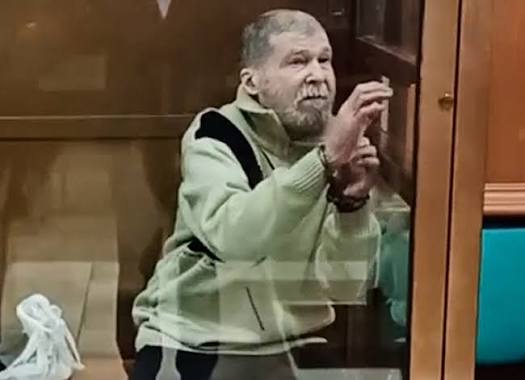
Who Is Stephen Hubbard?
Stephen Hubbard is a U.S. citizen and retired teacher who spent much of his adult life living and working outside the United States. Reuters reported that he grew up in Big Rapids, Michigan, served in the U.S. Air Force and National Guard, earned a master’s degree in English, and taught English in Japan for about 25 years. He later lived in Cyprus before moving to Izyum, a city in eastern Ukraine, in 2014.
Hubbard was 74 when Russia released him in October 2026, according to reporting by Reuters and The Associated Press. He had been living in Ukraine for years before Russia’s full-scale invasion began in February 2022. His sister, Patricia Hubbard Fox, told news organizations that he had a Ukrainian partner and was living a quiet life there.
Public information about Hubbard’s private life is limited. Major news reports have relied in part on accounts from his sister and other relatives, as well as Russian court and government statements. Where those accounts differ, this article identifies who made each claim rather than treating disputed statements as settled fact.
Stephen Hubbard’s Life Before His Detention
Before his detention, Hubbard had built an international life centered on teaching. Reuters reported that he taught English in Japan for approximately 25 years, then lived in Cyprus before settling in Izyum, Ukraine. The move to Ukraine placed him in a region that would later be affected by Russia’s invasion and occupation.
His sister told Reuters that Hubbard lived on a modest pension and had few local connections. Family members have described him as a teacher rather than a soldier, and questioned whether he would have taken up arms. Those statements represent the family’s account and should be distinguished from the claims made by Russian authorities.
Hubbard’s background helps explain why his case attracted attention: he was an older U.S. civilian living in a conflict zone, and the accounts of his role in Ukraine differed sharply. The information available publicly does not provide a complete, independently verified picture of his day-to-day life in Izyum immediately before his detention.
Detention in Ukraine and Russian Allegations
Russian authorities said Hubbard had joined a Ukrainian territorial defense unit and fought against Russian forces. According to the prosecution’s account reported by Reuters, Hubbard signed a contract with the Ukrainian military after Russia launched its full-scale invasion in February 2022, received payment, and was captured about two months later in Izyum.
Hubbard’s sister disputed the mercenary characterization. She told Reuters that her brother had worked as a teacher, was not a military person, and was unlikely to have fought at his age. The Associated Press later reported that she continued to reject the claim that he was a mercenary. These are the family’s assertions; the available reporting does not independently settle the competing accounts.
Reports also said Hubbard appeared in a video released by Russian channels in 2022, where a man identifying himself as Stephen James Hubbard described his background. Because the circumstances surrounding the recording and the later court proceedings are not fully transparent in public reporting, the video should not be treated as a complete independent account of his case.
Trial and Prison Sentence
In October 2024, a Russian court convicted Hubbard of serving as a mercenary for Ukraine and sentenced him to six years and 10 months in a general-security prison. The trial was closed to the public. Reuters and The Associated Press reported that prosecutors alleged Hubbard had been paid to fight in a Ukrainian territorial defense unit.
The sentence was imposed by a Russian court; it is not the same as an independent international finding about the full circumstances of Hubbard’s detention or conduct. Hubbard’s family questioned the allegation, and outside reporting noted the closed nature of the proceedings. A careful account should therefore say that he was convicted in Russia on the mercenary charge, while also noting that his relatives disputed the claim.
Hubbard spent more than four years in Russian custody before his release. The detention took place amid the wider war between Russia and Ukraine and a broader pattern of foreign nationals being arrested, tried, or imprisoned in Russia. His case gained additional attention in the United States because of his age, his family’s advocacy, and questions surrounding the court process.
Release from Russian Detention
Russia released Hubbard on October 21, 2026. Reuters reported that Putin announced the release during a meeting with U.S. special envoy Steve Witkoff in St. Petersburg. The Associated Press reported that Hubbard had been freed after more than four years behind bars and that his sister spoke with him by phone after his release.
President Trump said he had asked Putin to release Hubbard and described the release as happening without a prisoner swap. Russian officials also described the decision as made at Trump’s request, while citing humanitarian considerations and Hubbard’s health. Those descriptions are statements from the governments involved; public reporting does not establish every detail of the private discussions that led to the release.
For Hubbard’s family, the immediate significance was personal. The Associated Press reported that his sister described him as being in disbelief and traveled to meet him after learning he was free. News reports said he was returning to the United States. His release ended his Russian imprisonment, though it does not erase the contested history of the case or answer every question about the events in Ukraine.
Why Stephen Hubbard’s Case Drew Attention
Hubbard’s case attracted public interest for several reasons. He was an older American civilian detained in a war zone, the charge involved alleged participation in fighting for Ukraine, and his family challenged the account presented by Russian authorities. His closed-door trial and lengthy sentence also made the case difficult for the public to assess independently.
The case became news again when Russia released him during high-level talks involving U.S. and Russian officials. The timing led to coverage of the broader diplomatic context, including competing descriptions of whether the release involved an exchange or was a unilateral humanitarian decision. The most reliable way to describe that context is to attribute each claim to the official or news organization that reported it.
Hubbard’s case also illustrates why careful wording matters in biographies involving detention during wartime. A court conviction is a documented event, but allegations, family statements, government explanations, and independent reporting are different kinds of evidence. A fair biography should present those differences plainly, without declaring disputed claims proven or repeating them as fact.
Stephen Hubbard Biography: Quick Facts
| Fact | Details |
|---|---|
| Name | Stephen Hubbard; some reports identify him as Stephen James Hubbard |
| Nationality | American |
| Known for | His detention in Russia after being captured in Ukraine and his release in October 2026 |
| Age at release | 74, according to Reuters and The Associated Press |
| Hometown | Big Rapids, Michigan, according to Reuters |
| Career | Retired English teacher |
| Military service | Reuters reported that he served in the U.S. Air Force and National Guard |
| Education | Reuters reported that he earned a master’s degree in English |
| Teaching abroad | Reportedly taught English in Japan for about 25 years |
| Other reported residence | Lived in Cyprus before moving to eastern Ukraine |
| Moved to Ukraine | Reuters reported that he moved to Izyum in 2014 |
| Detained | Captured by Russian forces in Ukraine in 2022, according to reporting on the case |
| Russian charge | Russian authorities accused him of fighting as a mercenary for Ukraine |
| Court outcome | Convicted in a closed Russian court proceeding in October 2024 |
| Sentence | Six years and 10 months in prison |
| Family’s position | His sister disputed that he was a mercenary and questioned whether he had fought |
| Released | October 21, 2026 |
| Release context | Announced during talks involving Vladimir Putin and U.S. envoy Steve Witkoff; Trump said he had requested Hubbard’s release |
| Current status | Released from Russian custody and reported to be returning to the United States |
| Exact birth date | Not confirmed in the news sources used for this biography |
Frequently Asked Questions
Who is Stephen Hubbard?
Stephen Hubbard is an American retired English teacher from Michigan who lived in Ukraine. He became widely known after Russian forces detained him in 2022 and a Russian court convicted him on a mercenary charge.
How old is Stephen Hubbard?
Reuters and The Associated Press described Hubbard as 74 at the time of his release in October 2026. The sources used for this article do not confirm his exact date of birth.
Why was Stephen Hubbard imprisoned in Russia?
Russian authorities accused him of fighting as a mercenary for Ukraine. A Russian court convicted him in a closed proceeding in October 2024 and sentenced him to six years and 10 months. His family disputed the mercenary allegation.
Was Stephen Hubbard released?
Yes. Russia released him on October 21, 2026, after more than four years in custody. His release was announced during talks involving Russian President Vladimir Putin and U.S. envoy Steve Witkoff.
Did the United States exchange a prisoner for Hubbard?
President Trump said no prisoner swap was required. Russian officials described the release as a decision made at Trump’s request and cited humanitarian considerations. These are official descriptions of the diplomatic arrangement.
Was Stephen Hubbard a teacher?
Yes. News reports describe him as a retired English teacher who taught in Japan for many years before moving to Ukraine.
Did Stephen Hubbard’s family agree with the Russian court’s allegations?
No. His sister, Patricia Hubbard Fox, disputed that he was a mercenary and expressed doubt that he had fought for Ukraine.
Final Word
Stephen Hubbard is a retired American teacher whose life became entangled in the Russia-Ukraine war after he was detained in eastern Ukraine in 2022. Russian authorities accused him of fighting as a mercenary, and a closed court proceeding resulted in a prison sentence. His family disputed the accusation, and Hubbard remained in custody for more than four years before Russia released him in October 2026.
The clearest account keeps the established events separate from disputed claims: Hubbard was detained, convicted by a Russian court, and later released; his family challenged the allegation that he fought as a mercenary. As more information becomes available about his return and the circumstances of his detention, readers should look to reliable reporting and carefully attributed statements.