

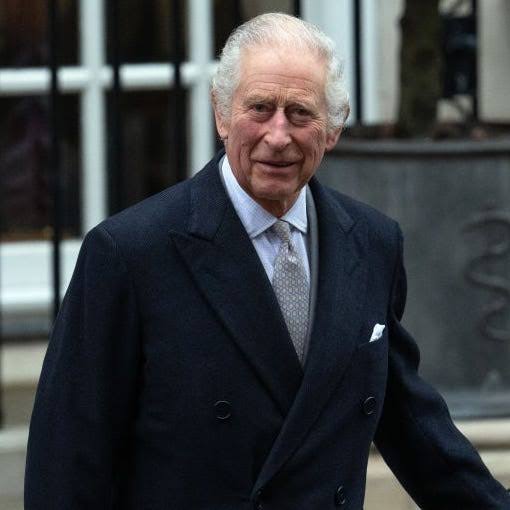
This biography covers Charles III’s early life, education, royal work, family, environmental advocacy, and accession to the throne. It distinguishes his years as Prince of Wales from his role as king and focuses on established public information.
Charles III: Biography at a Glance
| Detail | Information |
|---|---|
| Full name | Charles Philip Arthur George |
| Born | November 14, 1948 |
| Birthplace | Buckingham Palace, London, England |
| Parents | Queen Elizabeth II and Prince Philip, Duke of Edinburgh |
| Title | King Charles III |
| Accession | September 8, 2022 |
| Coronation | May 6, 2023, at Westminster Abbey |
| Education | Trinity College, University of Cambridge; studied archaeology, anthropology, and history |
| First wife | Diana, Princess of Wales; married in 1981 and divorced in 1996 |
| Second wife | Camilla, now Queen Camilla; married in 2005 |
| Children | Prince William and Prince Harry |
| Known for | Royal duties, charitable initiatives, and advocacy for environmental sustainability |
Early Life and Family
Charles Philip Arthur George was born at Buckingham Palace on November 14, 1948. He was the first child of Princess Elizabeth and Philip, Duke of Edinburgh. At the time of his birth, his grandfather, King George VI, was monarch. Charles’s early childhood changed significantly when his grandfather died in 1952 and his mother became Queen Elizabeth II. At just three years old, Charles became heir apparent.
As the eldest child of the monarch, Charles held traditional royal titles, including Duke of Cornwall. He also acquired Scottish titles associated with the heir to the throne. In 1958, Queen Elizabeth II created him Prince of Wales, although the formal investiture ceremony took place later, in 1969.
Charles was four years old when he attended his mother’s coronation at Westminster Abbey in 1953. The event offered an early, personal view of the ceremonial role he would one day assume. His life from then on included public appearances and royal expectations, alongside schooling and the ordinary experiences of childhood available within the royal household.
Education and University
Queen Elizabeth II and Prince Philip chose to send Charles to school rather than educate him solely with a palace tutor. He attended Hill House School in London before becoming a boarder at Cheam School in Berkshire. In 1962, he began attending Gordonstoun, a boarding school in Scotland that his father had also attended.
Charles spent two terms in 1966 as an exchange student at Timbertop, a remote campus of Geelong Church of England Grammar School in Australia. He later returned to Gordonstoun to complete his education. The experience gave him time outside Britain and exposed him to a different school environment from the one he had known at home.
In 1967, Charles entered Trinity College at the University of Cambridge. He first studied archaeology and anthropology, then switched to history. He graduated in 1970, becoming the first heir apparent to earn a university degree. Before his investiture as Prince of Wales, he also spent a term at the University College of Wales at Aberystwyth, where he studied Welsh.
Investiture as Prince of Wales
Charles was invested as Prince of Wales on July 1, 1969, at Caernarfon Castle. The ceremony was a major public event and formally marked a title he had received as a child. His connection with Wales became an important part of his public work. He undertook visits, supported Welsh organizations, and learned the Welsh language in preparation for the investiture.
His tenure as Prince of Wales lasted from 1958 until he became king in 2022. The formal investiture in 1969 was only one part of that long period. As Prince of Wales, Charles undertook official engagements in the United Kingdom and overseas, supported charitable organizations, and represented the monarch at events and visits.
In 2017, Charles became the longest-serving Prince of Wales in history. The title passed to his son William after Charles’s accession to the throne.
Military Service
Charles undertook military training in the Royal Air Force and the Royal Navy. In 1971, he trained as a jet pilot at RAF Cranwell. Later that year, he began naval service, continuing a family tradition associated with his father and earlier generations.
His naval experience included service aboard the guided-missile destroyer HMS Norfolk and other ships. He qualified as a helicopter pilot in 1974 and served with 845 Naval Air Squadron. In 1976, he took command of HMS Bronington, a coastal minehunter, during the final months of his active naval career.
Military service formed one part of Charles’s preparation for royal duties. As Prince of Wales, he also maintained relationships with armed forces organizations, supported service personnel and veterans, and took part in ceremonial and commemorative events. These connections continued after he became king.
Charitable Work and The Prince’s Trust
Charitable work became a central part of Charles’s public life. The Royal Family says he helped establish more than 20 charities over four decades, including The Prince’s Trust, The Prince’s Foundation, and the Prince of Wales’s Charitable Fund. The Prince’s Trust was founded in 1976 to support young people, particularly those facing barriers to education, training, or employment.
Charles’s charitable interests covered a wide range of areas, including youth opportunity, healthcare, education, rural communities, the arts, architecture, and environmental protection. His approach often involved supporting organizations directly and bringing attention to issues through public speeches, visits, and partnerships.
After Charles became king, some organizations connected to his former title took on new names or structures. For example, The Prince’s Trust is now known as The King’s Trust. When describing his charitable history, it is useful to distinguish the name an organization used during his years as Prince of Wales from its present name.
Environmental Advocacy and Sustainability
Charles’s interest in the environment predates many of the public sustainability initiatives associated with his later career. The Royal Family notes that he spoke about plastic pollution in 1970. Over the following decades, he raised concerns about climate change, deforestation, ocean pollution, soil health, biodiversity, and the responsible use of natural resources.
As Prince of Wales, he promoted sustainability through speeches, partnerships, and initiatives intended to bring together business leaders, governments, communities, and environmental organizations. In 2019, he launched the Sustainable Markets Initiative, which works with private-sector organizations on ways to support a transition toward more sustainable business practices.
Charles’s advocacy has sometimes attracted debate, particularly when public figures enter discussions about policy and science. His role as a constitutional monarch differs from his earlier role as Prince of Wales. As king, his official position is shaped by the constitutional conventions of the monarchy, while public communication about his work is issued through the Royal Household.
Marriage and Family
Charles married Lady Diana Spencer at St Paul’s Cathedral on July 29, 1981. Their sons are Prince William, born in 1982, and Prince Harry, born in 1984. The couple undertook public engagements together and became one of the most recognized royal families in the world.
In December 1992, the British government announced that Charles and Diana had agreed to separate. Their marriage was formally dissolved in 1996. Diana continued her public and charitable work until her death in a car crash in Paris on August 31, 1997. Charles traveled to Paris with her sisters to bring her body back to London and later accompanied their sons during her funeral procession.
Charles married Camilla Parker Bowles in a civil ceremony at Windsor Guildhall on April 9, 2005. After the marriage, she became the Duchess of Cornwall. Following Charles’s accession, she became Queen Camilla. As a blended family, Charles and Camilla also have stepchildren from their earlier marriages.
Becoming King Charles III
Queen Elizabeth II died on September 8, 2022, at Balmoral Castle in Scotland. Under the rules of succession, Charles became king immediately upon her death. He chose the regnal name Charles III. The Accession Council formally proclaimed him king on September 10, 2022, in a ceremony at St James’s Palace.
Charles’s accession marked the beginning of a new reign after Elizabeth II’s 70-year monarchy. As sovereign, he became head of state in the United Kingdom and in other realms that recognize the British monarch as their head of state. The monarch’s role is constitutional and ceremonial; elected governments and parliaments carry out the day-to-day political work of governing.
Charles was crowned alongside Queen Camilla at Westminster Abbey on May 6, 2023. The coronation combined religious ceremony, historic regalia, and public celebration. It was the first coronation of a British monarch in 70 years, following Queen Elizabeth II’s coronation in 1953.
Charles III Career and Life Timeline
| Year | Milestone | Significance |
|---|---|---|
| 1948 | Born at Buckingham Palace | First child of Princess Elizabeth and Philip, Duke of Edinburgh |
| 1952 | Became heir apparent | His mother became Queen Elizabeth II after King George VI’s death |
| 1958 | Created Prince of Wales | Received the title at age nine |
| 1967 | Entered Trinity College, Cambridge | Studied archaeology and anthropology, then history |
| 1969 | Invested as Prince of Wales | Formal ceremony held at Caernarfon Castle |
| 1970 | Graduated from Cambridge | Became the first heir apparent to earn a university degree |
| 1971–1976 | Served in the Royal Air Force and Royal Navy | Trained as a pilot, served at sea, and commanded HMS Bronington |
| 1976 | Founded The Prince’s Trust | Created an organization to support young people |
| 1981 | Married Lady Diana Spencer | They later had two sons, William and Harry |
| 1996 | Divorced Diana, Princess of Wales | Their marriage was formally dissolved |
| 2005 | Married Camilla Parker Bowles | She later became Queen Camilla |
| 2017 | Became the longest-serving Prince of Wales | Held the title for more than six decades |
| 2022 | Succeeded Queen Elizabeth II | Became King Charles III on September 8 |
| 2023 | Coronation at Westminster Abbey | Crowned King on May 6 |
Frequently Asked Questions
When was Charles III born?
Charles III was born on November 14, 1948, at Buckingham Palace in London.
How old is King Charles III?
He was born on November 14, 1948, and is 77 years old as of October 2026.
When did Charles become king?
Charles became king on September 8, 2022, the day Queen Elizabeth II died. He was formally proclaimed at the Accession Council two days later.
When was King Charles III crowned?
Charles III and Queen Camilla were crowned at Westminster Abbey on May 6, 2023.
What did Charles III study at university?
At Trinity College, Cambridge, he studied archaeology and anthropology before switching to history. He graduated in 1970.
Who are King Charles III’s children?
His sons are Prince William and Prince Harry, from his marriage to Diana, Princess of Wales.
What was Charles III known for before becoming king?
As Prince of Wales, he was known for charitable work, public duties, and advocacy on environmental sustainability, architecture, youth opportunities, and rural communities.
What is The Prince’s Trust called now?
The organization is now known as The King’s Trust. It was founded in 1976 when Charles was Prince of Wales.
Final Word
Charles III’s life has been shaped by a long preparation for public service. He became heir to the throne as a child, studied at Cambridge, served in the armed forces, and spent decades carrying out royal duties as Prince of Wales. His charitable and environmental work formed a significant part of that public role.
Since becoming king in 2022, Charles has taken on the constitutional and ceremonial responsibilities of the monarch. His biography connects two different chapters: a long period as heir apparent and a reign that began with his accession and coronation. Understanding both helps explain his place in the modern British monarchy.