

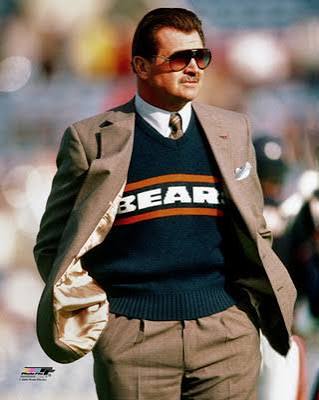
Mike Ditka at a Glance
| Detail | Information |
|---|---|
| Full name | Michael Keller Ditka |
| Born | October 18, 1939, in Carnegie, Pennsylvania |
| Died | October 9, 2026, at age 86 |
| Profession | Football player, coach and broadcaster |
| College | University of Pittsburgh |
| Playing position | Tight end |
| NFL teams as a player | Chicago Bears, Philadelphia Eagles and Dallas Cowboys |
| Best-known coaching role | Head coach of the Chicago Bears |
| Hall of Fame | Pro Football Hall of Fame, Class of 1988 |
| Major coaching achievement | Led the Bears to victory in Super Bowl XX |
Early Life and College Football
Michael Keller Ditka was born in Carnegie, Pennsylvania, and grew up in nearby Aliquippa. He attended Aliquippa High School before enrolling at the University of Pittsburgh. His strong play as a two-way end established him as one of the standout college football players of his era.
At Pittsburgh, Ditka was known for his physical style and ability to contribute as both a blocker and receiver. In 1960, his senior season, he was a unanimous All-American and team captain. The College Football Hall of Fame records that he led Pitt in receiving during multiple seasons and also contributed as a punter.
Ditka’s college performance made him a first-round prospect in both the NFL and the newly formed American Football League. The Chicago Bears selected him fifth overall in the 1961 NFL Draft. He chose to play in the NFL, beginning a professional career that would last 12 seasons.
NFL Playing Career
Ditka entered the NFL with the Chicago Bears in 1961. He made an immediate impact, catching 56 passes for 1,076 yards and 12 touchdowns in his rookie season. He was named NFL Rookie of the Year, an impressive start for a player at a position that was still most often valued for blocking.
At the time, tight ends were generally expected to help protect the quarterback and block defenders. Ditka did that work, but he also became a dangerous receiving target. His combination of size, strength and ability to catch passes helped demonstrate how the position could contribute more directly to an offense.
He played six seasons with Chicago, earning five Pro Bowl selections and multiple All-Pro honors. In 1963, he helped the Bears win the NFL championship. He was traded to the Philadelphia Eagles in 1967 and later joined the Dallas Cowboys in 1969.
With Dallas, Ditka continued to play a role as a receiver and blocker. The Cowboys won Super Bowl VI after the 1971 season, defeating the Miami Dolphins. Ditka caught a touchdown pass in the game. He retired after the 1972 season with 427 receptions, 5,812 receiving yards and 43 touchdowns in 158 regular-season games.
His influence on the position went beyond his statistics. He became one of the early tight ends who could threaten defenses as a receiver while still handling the physical duties of blocking. The Pro Football Hall of Fame has described him as a player who helped redefine what teams could expect from a tight end.
From Player to Coach
After retiring as a player, Ditka moved into coaching. In 1973, he joined the Dallas Cowboys staff under head coach Tom Landry. He served as an assistant coach and special teams coordinator, later becoming assistant head coach. Dallas won Super Bowl XII during the 1977 season, giving Ditka a championship as a coach before he became a head coach himself.
In 1982, Ditka returned to Chicago as head coach of the Bears. He brought the same forceful style that had marked his playing career. His teams were known for their toughness, strong defense and confident approach. The Bears improved under his leadership and became a regular contender in the NFC.
Ditka’s coaching also included difficult moments. In 1988, he suffered a heart attack during a workout at the team facility. He returned to the sideline soon afterward. The Bears finished that season with a 12–4 record and reached the NFC Championship Game.
The 1985 Chicago Bears and Super Bowl XX
The high point of Ditka’s coaching career came with the 1985 Chicago Bears. The team finished the regular season 15–1 and dominated the playoffs. In Super Bowl XX, Chicago defeated the New England Patriots 46–10.
The team’s defense became one of the most celebrated units in NFL history, while its offense featured players including quarterback Jim McMahon, running back Walter Payton and defensive tackle William “The Refrigerator” Perry. Ditka’s leadership helped bring the roster together, and the Bears’ swagger became part of the team’s public identity.
The 1985 season turned Ditka into a national sports figure. The Bears’ “Super Bowl Shuffle,” recorded before the team won the championship, became a pop-culture moment. Ditka’s sideline presence and recognizable appearance—often including his mustache and Bears sweater vest—made him one of the most visible coaches in the league.
Ditka won NFL Coach of the Year awards in 1985 and 1988. He coached the Bears through the 1992 season. In 11 seasons as Chicago’s head coach, his teams posted a 106–62 regular-season record and made multiple playoff appearances.
New Orleans Saints Coaching Years
After a break from head coaching, Ditka was hired by the New Orleans Saints in 1997. The team was looking for a high-profile leader who could help change its fortunes. Ditka coached the Saints for three seasons, through 1999.
His time in New Orleans was more challenging than his run in Chicago. The Saints went 15–33 during those seasons and did not reach the playoffs. Ditka’s tenure ended after the 1999 season. His overall NFL head-coaching record was 121–95 in the regular season, with a 6–6 postseason record.
Broadcasting and Public Life
Following his coaching career, Ditka became a television football analyst. He worked for several networks, including NBC and CBS, and became widely known for his role on ESPN’s Sunday NFL Countdown. His direct opinions and energetic delivery made him a distinctive presence on sports television.
Ditka also remained active in public life and business ventures. He appeared in commercials, made guest appearances in entertainment projects and became a recognizable figure beyond football audiences. His name was often associated with Chicago sports culture, where his playing and coaching achievements had made him a local icon.
His style could be polarizing. Ditka was outspoken and sometimes drew criticism for his comments on sports and public issues. At the same time, colleagues and supporters often pointed to his generosity and loyalty. A biography of Ditka should account for both his football accomplishments and the forceful personality that shaped his public image.
Personal Life
Ditka was married to Diana Ditka, and they had children and grandchildren. His family announced his death in October 2026, describing him as a beloved husband, father, grandfather and friend. The statement emphasized the difference between the public figure known to football fans and the family member they knew privately.
Ditka also experienced health challenges during and after his football career. His 1988 heart attack was a major event during his coaching tenure, but he returned to work. Later in life, he occasionally spoke publicly about health and the physical demands of football. Specific medical details should be attributed to reliable reporting rather than inferred from rumors.
Mike Ditka Career Summary
| Career area | Highlights |
|---|---|
| College football | Unanimous All-American at the University of Pittsburgh in 1960 |
| Professional playing career | 12 NFL seasons with the Bears, Eagles and Cowboys |
| Receiving totals | 427 catches, 5,812 yards and 43 touchdowns |
| Player honors | Five Pro Bowl selections; Pro Football Hall of Fame Class of 1988 |
| Playing championship | Won Super Bowl VI with the Dallas Cowboys |
| Assistant coaching | Won Super Bowl XII with Dallas as an assistant coach |
| Head coaching | Led the Chicago Bears to Super Bowl XX victory |
| Broadcasting | Worked as an NFL analyst, notably on ESPN’s Sunday NFL Countdown |
Death and Legacy
Mike Ditka died on October 9, 2026, at age 86. The Pro Football Hall of Fame and NFL confirmed his death. His career connected several generations of football: he was a standout tight end in the 1960s, an assistant coach on a championship Dallas team, the leader of Chicago’s Super Bowl-winning Bears and later a familiar television analyst.
Ditka’s influence on the tight end position remains an important part of his legacy. He showed that a tight end could be both a physical blocker and a central receiving weapon. His coaching legacy is inseparable from the 1985 Bears, a team still remembered for its dominance, confidence and championship run.
In Chicago, Ditka became more than a coach. He represented a particular image of the city’s football culture: tough, direct and proud. Fans knew him as “Da Coach,” while players and colleagues remembered the intensity he brought to the game. His achievements earned him a place in the Pro Football Hall of Fame and enduring recognition among the NFL’s most memorable figures.
Frequently Asked Questions
Who was Mike Ditka?
Mike Ditka was an American football tight end, coach and broadcaster. He played for the Chicago Bears, Philadelphia Eagles and Dallas Cowboys, then coached the Bears and New Orleans Saints.
How old was Mike Ditka when he died?
He was 86. The Pro Football Hall of Fame reported that he died on October 9, 2026.
What was Mike Ditka’s real name?
His full name was Michael Keller Ditka.
What team did Mike Ditka coach to a Super Bowl victory?
He coached the Chicago Bears to victory in Super Bowl XX after the 1985 season. Chicago defeated the New England Patriots 46–10.
Did Mike Ditka win a Super Bowl as a player?
Yes. He won Super Bowl VI as a player with the Dallas Cowboys. He also won Super Bowl XII as a Dallas assistant coach and Super Bowl XX as the Bears’ head coach.
What were Mike Ditka’s career statistics?
He recorded 427 receptions for 5,812 yards and 43 touchdowns in 158 regular-season games.
When was Mike Ditka inducted into the Pro Football Hall of Fame?
Ditka was inducted as a player in 1988.
Final Word
Mike Ditka’s legacy rests on a rare combination of achievement as a player, assistant coach, head coach and broadcaster. He helped expand the role of the tight end, won championships in three different NFL roles and led the 1985 Chicago Bears to one of the most celebrated seasons in league history.
His intensity and outspoken personality made him a compelling figure both on and off the field. After his death at 86 in 2026, he is remembered as a Hall of Famer whose influence reached far beyond the scoreboard—especially in Chicago, where “Da Coach” became part of the city’s football identity.